Do You Qualify for an Emotional Support Animal in Florida?
Nobody qualifies for an emotional support animal by filling in a form, paying a fee or joining a registry. In Florida, a licensed clinician decides, after an individual evaluation, whether an emotional support animal is appropriate for you. Below, we explore how the decision is made, who is allowed to make it under Florida Statute 760.27, and where optional registration fits.
16 min readUpdated November 15, 2026Florida-specific
Key Takeaways About ESAs in Florida
A licensed clinician decides whether you qualify, after an individual evaluation. A registry, a form or a fee cannot.
Under Florida Statute 760.27, the clinician must be licensed in Florida or have an established in-person relationship with you.
Housing rights come only from a letter from a licensed health care or telehealth practitioner. Registration is optional and is not a substitute for that letter.
To register, you must be eligible for an ESA and have an ESA letter.
Nobody can promise approval. Be wary of any service that does.
Qualifying comes first and registration second: you register only once you are eligible for an ESA and hold an ESA letter, and registration never decides or proves that you qualify.
Who Decides Whether You Qualify for an ESA in Florida
There is no checklist that makes a person automatically eligible. In general, someone may qualify when a licensed clinician concludes that the person has a disability-related need, meaning a condition that substantially limits one or more major life activities, and that an emotional support animal may help with the effects of that condition. The clinician makes that judgment. Neither a website nor a registry can make it for you.
An emotional support animal (ESA) is an animal that provides therapeutic comfort to a person with that kind of need. It is not a pet by another name, and it is not a trained service animal. A service animal is individually trained to perform specific tasks. An ESA is not required to have any special training, and its protections are focused on housing under the Fair Housing Act. If you are unsure which category fits, our guide to ESA versus service dog rights in Florida explains the difference, and our piece on taking an ESA into public places covers what that means for stores and restaurants.
Nobody Can Promise You Approval
A clinician evaluates each person individually, so the outcome is not decided in advance. Be skeptical of any service that offers an instant letter or guaranteed approval. If an ESA is not therapeutically appropriate for you, a legitimate clinician will say so.
What a Florida-Licensed Clinician Evaluates
A genuine evaluation is a conversation about your life, not a checkout form. Expect the clinician to explore the following.
Your current symptoms and daily functioning. How do sleep, work, social contact, concentration or leaving the house feel right now?
How long have you had these symptoms and how significant is their impact? Is this a lasting pattern, or a short, passing rough patch?
Whether an animal may help. Can the clinician reasonably see a connection between your symptoms and the support an animal could offer?
Your living situation. Where do you live, and can you responsibly care for the animal there?
Your wider care. What other supports, such as therapy, medication managed by your prescriber, or community, are part of your life?
The evaluation is a Telehealth conversation with a licensed clinician.
Having a concern such as anxiety, depression or loneliness does not by itself mean you qualify. Whether an ESA is therapeutically appropriate for you is for the clinician to determine.
Florida Statute 760.27 governs how housing providers handle requests to keep an assistance animal, including an emotional support animal. When your disability or disability-related need is not readily apparent, a housing provider may ask for reliable documentation. The statute points to a health care practitioner who is licensed in Florida, or who has an established in-person relationship with you and is licensed in another state. It also says that an online registration alone, or a document obtained solely from an online source, is not sufficient documentation.
The practical result is simple: an out-of-state, online-only provider with no Florida license and no prior in-person relationship with you cannot issue a valid Florida ESA letter. Telehealth itself is fine, as long as the practitioner meets the same license rule.
Source of the Document
Valid for a Florida Housing Request?
Why
Clinician licensed in Florida who evaluates you
Yes
Meets the license rule in Statute 760.27
Practitioner with an established in-person relationship with you
Yes
The second path the statute describes
Out-of-state, online-only provider with no prior relationship
No
Not reliable documentation in Florida
Registry, ID card or certificate
No
Online registration alone is not sufficient
Friend, relative, breeder or unlicensed consultant
No
Not a licensed practitioner
Licensed clinical social workers, mental health counselors, marriage and family therapists, psychologists, psychiatrists and licensed primary-care providers working within their scope are the usual authors. Before you rely on any letter, check the license through the Florida Department of Health lookup. Our guides to who can write an ESA letter in Florida and to Florida ESA letter requirements walk through the verification steps and what a landlord expects to see in the letter.
Why Free Templates Fail
A downloaded template has no clinician behind it and no evaluation. Our explainer on free ESA letters, templates and PDFs shows why housing providers can reasonably reject them.
How Florida Life Shapes the Conversation
A clinician evaluates you as an individual, but where you live is part of the context. Heat and humidity in places like Fort Myers, Miami-Dade County and Orlando can keep people indoors for weeks, which deepens isolation for a retiree whose family lives up north or a remote worker in a new city. Think about the animal's welfare in that climate too: early or after-sunset walks, shade, water, and never a parked car.
Florida also has an unusually large number of condominiums, HOA communities and 55-plus developments, many of which restrict pets by size, breed or number, plus snowbird and tourist rental markets in cities like Naples, St. Petersburg and Sarasota. In each case the letter is the document that supports a request under the Fair Housing Act. Our guides on whether an HOA or condo association can deny an ESA and on what Florida landlords must allow cover those settings.
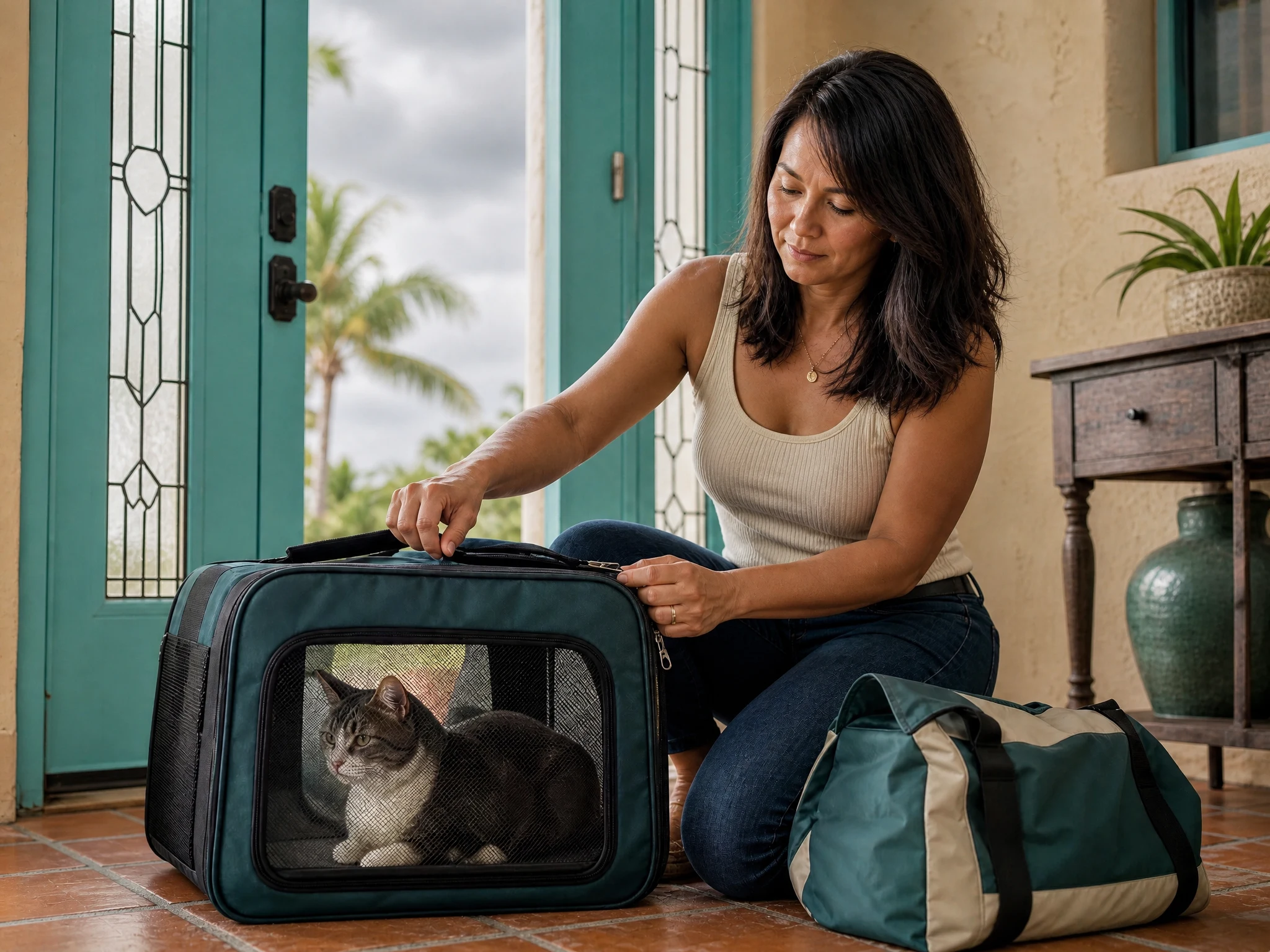
Hurricane season runs from June to November. Watching the forecast and weighing evacuation in areas such as Tampa Bay, the Keys and the Gulf Coast can be hard on anyone. Planning helps. Many public shelters have limited pet policies, so identify pet-friendly shelters or lodging in advance and keep vaccination records and a carrier ready.
Storm-season planning belongs on every Florida owner's list.
What to Prepare Before You Start Your ESA Evaluation in Florida
Gather the following before you begin.
A plain-language note of how your symptoms affect sleep, work, social contact and leaving the house, and for how long.
A list of the other supports in your life, such as therapy or medication managed by your prescriber.
Details of where you live, plus your lease, HOA declaration or condo rules, so you know who receives accommodation requests. Often that is a management company or board, not the on-site leasing office.
Basic details about the animal you have in mind: species, approximate size and vaccination records.
Keep your lease and any association rules close at hand.
If you receive a letter, expect that landlords commonly ask for one issued within the past twelve months. Florida sets no statutory expiration date, so that is a working norm and not a legal rule. Our guides cover whether ESA letters expire and what an ESA letter costs.
Eligible and Holding a Letter: Registering Your ESA in Florida
Qualifying and registering are two different moments, and the order matters. The clinician's evaluation comes first. If it ends with an ESA letter, you are then eligible for an emotional support animal and hold the letter, and those are the two conditions for registering. Registration does not decide anything about you; the letter and the clinician do. It records an animal for a person who has already qualified.
That is why the first registration step asks you to submit your contact information and confirm you meet the ESA requirements. The confirmation is yours to make, based on the evaluation you already completed. Registration does not re-evaluate you, and it cannot turn a no into a yes. If a clinician concluded that an ESA is not appropriate for you, there is nothing to register.
What the Three ESA Registration Steps Ask of You in Florida
Contact Information and EligibilityGive your contact details and confirm that you meet the ESA requirements, meaning you are eligible for an ESA and have your letter.
Your Animal's Details and PhotoEnter the animal's name, type, breed, sex, birthday and weight. A microchip number is optional. After purchase we email you so you can upload a photo.
ID and Certificate by MailYour animal ID and certificate arrive in the mail, and lost pet recovery and legal support unlock.
Notice how little of this touches your health. The evaluation covered your symptoms, your daily functioning and your wider care, and that conversation stays between you and the clinician. Registration asks about the animal. A microchip number is worth entering if your pet has one, since a shelter or anyone who finds the animal can look it up by microchip number or ID number and reach you.
Registration Never Answers the Qualifying Question
Nothing in the three steps tests whether an ESA is therapeutically appropriate for you. That judgment belongs to the licensed clinician, which is why the letter has to exist before you register.
If you are still deciding whether to seek an evaluation, put registration out of your mind for now. It will not make the evaluation easier, and it adds nothing to the clinician's decision. Once you hold a letter, you can weigh the registration benefits against your own situation, including your housing rights in Florida, which come from the letter alone.
Where ESA Registration Fits in Florida
Registration is a separate, optional service. It is not a substitute for an ESA letter, and it gives you no ESA rights and no additional rights of any kind. A letter from a licensed health care or telehealth practitioner is what carries housing rights. To register, you must be eligible for an ESA and have a letter.
ESA Letter
Registration
What it is
A document from a licensed health care or telehealth practitioner
An optional listing in an ESA and lost-pet recovery database
Carries housing rights
Yes, it supports a request under the Fair Housing Act
No
Needs a clinician evaluation
Yes
No, but you must be eligible and have a letter
Sufficient alone in Florida
Generally the documentation a housing provider may ask for
No, online registration alone is not sufficient under Statute 760.27
If you choose to register, it takes three steps: submit your contact information and confirm you meet the ESA requirements, submit your animal's information and a photo, and receive your animal ID and certificate by mail. The benefits are lifetime registration per pet in the lost-pet recovery database, an animal ID card and certificate that carry no legal housing rights, $25 off an ESA letter consultation, access to a legal support team if your Fair Housing Act rights are violated (housing matters only, and we are not a law firm), and a registry listing.
Why Florida Owners Value the Lost-Pet Database
Animals are sometimes separated from their owners in a hurricane evacuation, and a registered animal with a photo on file is easier to reunite after a storm. For most Florida households, that is the benefit that matters first.
A landlord may look up your record to see that you worked with a legitimate company, but no landlord is required to use the registry or accept it. Our guide to ESA registration in Florida and what it is not covers the line between the two in more detail.
Using ESA Registration Beside Your Letter in Florida
Once you qualify and hold a letter, the letter does the housing work. Registration sits beside it and does a different job, so it helps to know which document answers which question.
Question
Which Document Answers It
Why
Does my landlord have to consider my request?
The ESA letter
It carries housing rights under the Fair Housing Act and Florida Statute 760.27
Did I qualify for an ESA?
The clinician's evaluation
A registry cannot decide it
Can someone reach me if my animal is lost?
Registration
Lifetime listing in the lost pet recovery database
Did I work with a legitimate company?
The registry listing
A landlord may look it up, but is not required to
How Registered Florida ESA Owners Handle Housing Requests
When you make a written request to a landlord, condo association or HOA, send the letter. If you registered, the registry listing is an extra reference a landlord may choose to check, and it should never replace the letter in your request. No landlord is required to use the registry or accept it, and online registration alone is not sufficient documentation under Statute 760.27. The ID card and certificate identify your animal and carry no legal housing rights, so keep them out of the place where the letter belongs.
If a housing provider answers with something other than a clear yes or no, registered members also have access to a legal support team for Fair Housing Act housing matters. We are not a law firm, and no outcome is guaranteed. For disputes beyond that, speak with a Florida-licensed attorney or your local legal aid office.
Where ESA Registration Does Not Reach in Florida
It does not give air travel rights. Airlines treat ESAs as pets, so follow the airline's pet policy.
It does not give public access rights. Those belong to service animals, and we do not register service dogs.
It does not extend or refresh your letter. Whether a letter is still current is a separate question, covered in our guide to whether ESA letters expire.
For many Florida households the lost pet database is the part that earns its keep. Hurricane evacuations and Gulf Coast storms can separate animals from owners, and a registered animal with a photo and a microchip number on file is easier for a shelter to trace back to you. Registered members also get $25 off an ESA letter consultation, which matters if you need to arrange a new evaluation later. Registration is optional, so choose it for those benefits and not because you think it strengthens your qualification, because it does not.
Veterans and Service Members Seeking an ESA in Florida
Florida's veterans live in very different settings, from retirement condos in Sarasota to rentals near Pensacola and apartments in Jacksonville. The same rules apply: a licensed clinician decides whether an ESA is therapeutically appropriate for you. One point of confusion deserves clarity early. The VA does not issue ESA letters. A VA clinician may discuss an animal as part of your wellbeing, but an ESA letter for housing purposes comes from a private licensed health care or telehealth practitioner who evaluates you individually.
Where you live changes which housing rules apply.
Where you live matters too. In a private rental, condo or HOA community, the Fair Housing Act and Statute 760.27 are the frameworks a landlord or association typically applies. Housing connected to MacDill Air Force Base in Tampa, Naval Air Station Jacksonville and Naval Air Station Pensacola generally follows Department of Defense policy, which can differ on documentation, approvals and animal limits. Contact the installation housing office and ask for the current rules in writing.
A clinician can help you weigh allergies, startle responses to sudden barking, and the energy and funds an animal requires. An ESA is not a replacement for professional care. If you are in crisis, contact the Veterans Crisis Line by dialing 988 and then pressing 1, or call emergency services. Our full guide to emotional support animals for veterans in Florida covers records, existing providers and housing.
Common Misunderstandings About ESAs in Florida
A Registry Number Is Not an ESA Qualification
No registry, ID card or certificate decides whether you qualify, and none replaces the letter. Online registration alone is not sufficient documentation in Florida.
Telehealth Is Not the Problem for an ESA in Florida
An evaluation by video can be legitimate when the clinician is licensed in Florida or has the in-person relationship the statute describes. What does not work is an out-of-state provider with no connection to you.
An ESA Is Not a Flight or Public-Access Pass
Since the Department of Transportation changed its rules in 2021, airlines treat emotional support animals as ordinary pets, so follow the airline's pet policy and check with the airline directly. An ESA's protections are focused on housing, so do not assume it can accompany you into places that do not allow pets.
A Florida Landlord Cannot Demand Your Medical Details
A landlord may verify that a letter is credible, but generally may not ask for your diagnosis, symptoms, treatment history or medical records, and may not require a registration, ID card or vest. Our guide to how Florida landlords verify an ESA letter lists what they can and cannot ask. A landlord can still refuse for narrow reasons, such as an animal that poses a direct threat or documentation that is unreliable, which we cover in when a landlord can legally reject an ESA.
ESA Species Are Not Limited to Dogs
Cats and other common domestic animals can be considered. See our guides to emotional support dogs and cats in Florida.
Your Next Steps Toward an ESA in Florida
If you have read this far and an ESA still seems like a fit, this is the honest sequence. The letter comes first, and registration is a separate, optional step.
Consider Your NeedsThink about your day-to-day needs, your living arrangement, and whether you can care for an animal in Florida's climate for its whole life.
Find a Florida-Licensed ClinicianThat means a license in Florida, or a qualifying prior in-person relationship under Statute 760.27. All Emotional Support Animal Florida clinicians qualify to prescribe ESAs.
Complete the EvaluationTalk through your history, symptoms and daily life. The clinician decides, and we cannot promise a letter.
Make Your Housing Request in WritingIf you receive a letter, send it with a written request to your landlord, condo association or HOA, and keep dated copies.
Consider Optional RegistrationIf you want lost-pet recovery and the other benefits, you can register once you are eligible and hold a letter.
If you would like to begin with an evaluation, our intake form connects you with a licensed clinician. If a dispute with a landlord arises, speak with a Florida-licensed attorney or your local legal aid office. We offer information, not legal advice.
FAQs About Qualifying for an ESA in Florida
Below, we answer the most commonly asked questions about qualifying for an ESA in Florida.
Do I need to qualify for an ESA before I can register my animal in Florida?
Yes. To register, you must be eligible for an emotional support animal and have an ESA letter. Registration comes after the clinician's evaluation, never before it.
Does registering my emotional support animal in Florida mean I qualify for an ESA?
No. Registration is optional, it is not a substitute for an ESA letter, and it does not show that you qualify. A licensed clinician decides that after an individual evaluation.
What does ESA registration add once I qualify in Florida?
Lifetime registration per pet in our ESA and lost pet recovery database, an animal ID card and certificate that carry no legal housing rights, $25 off an ESA letter consultation, access to a legal support team for Fair Housing Act housing matters (we are not a law firm), and a registry listing a landlord may look up.
Can I qualify for an ESA in Florida Through Telehealth?
Possibly, if the clinician is licensed in Florida or has the established in-person relationship that Florida Statute 760.27 describes. An out-of-state, online-only provider with no connection to you cannot issue a valid Florida ESA letter.
What does a Florida clinician look at when deciding whether I qualify for an ESA?
Your current symptoms and daily functioning, how long you have had them and how significant their impact is, whether an animal may help, your living situation and your wider care. The clinician decides, and nobody can promise approval in advance.
How Do I Qualify for an ESA as a Florida Veteran?
The same way as anyone else: a licensed clinician decides, after an individual evaluation. The VA does not issue ESA letters, so a housing letter comes from a private licensed health care or telehealth practitioner who evaluates you individually.
Keep Reading
Related Do You Qualify Guides
Our newest and most relevant guides in this topic, written for Florida renters and owners.
Start with the intake and we will connect you with a licensed clinician who evaluates you individually. Starting is not a promise of approval, because the clinician decides.
Registration is optional. It is not a substitute for an ESA letter and gives no ESA rights or additional rights; a letter from a licensed health care or telehealth practitioner is what carries housing rights.