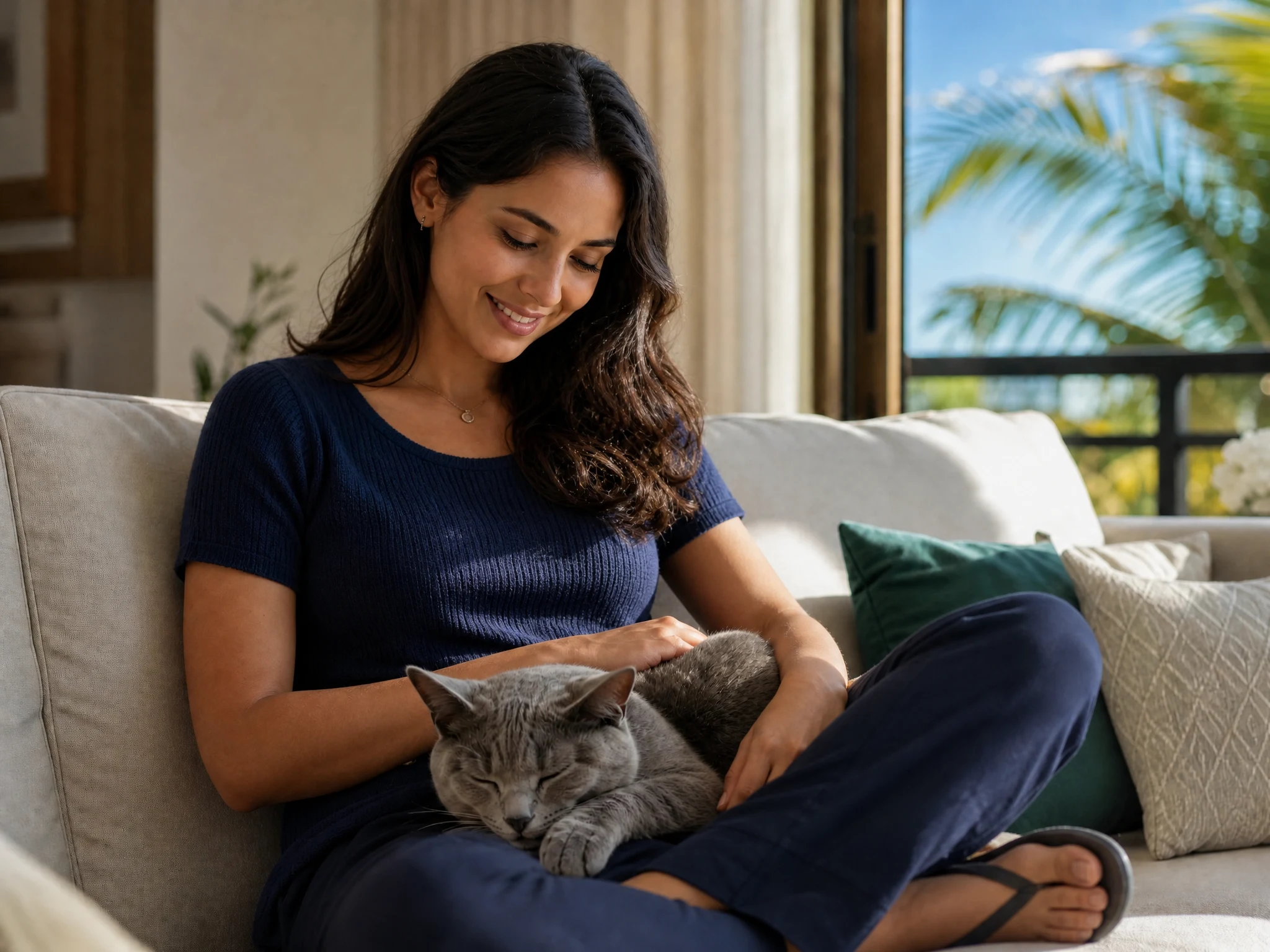
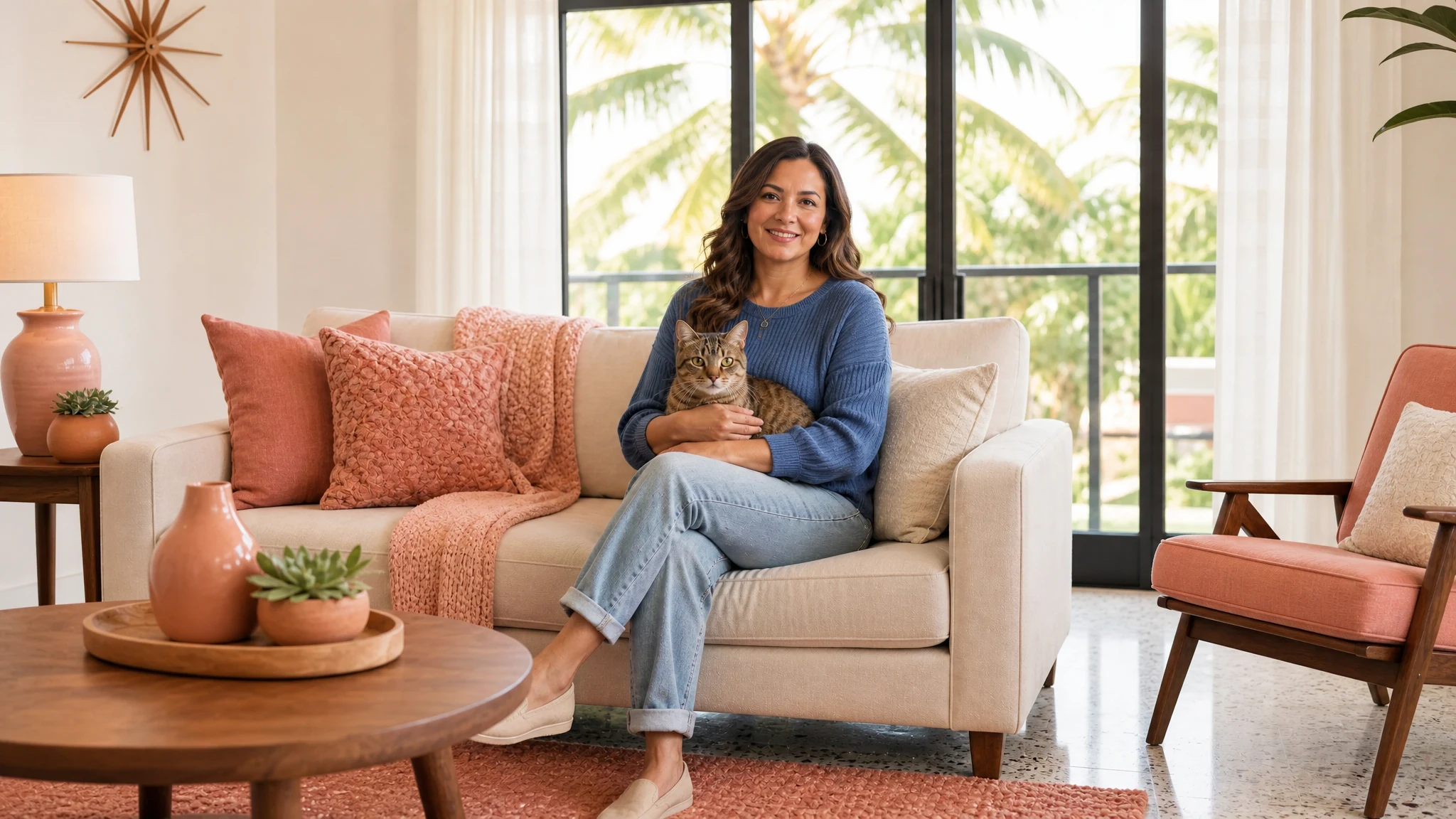
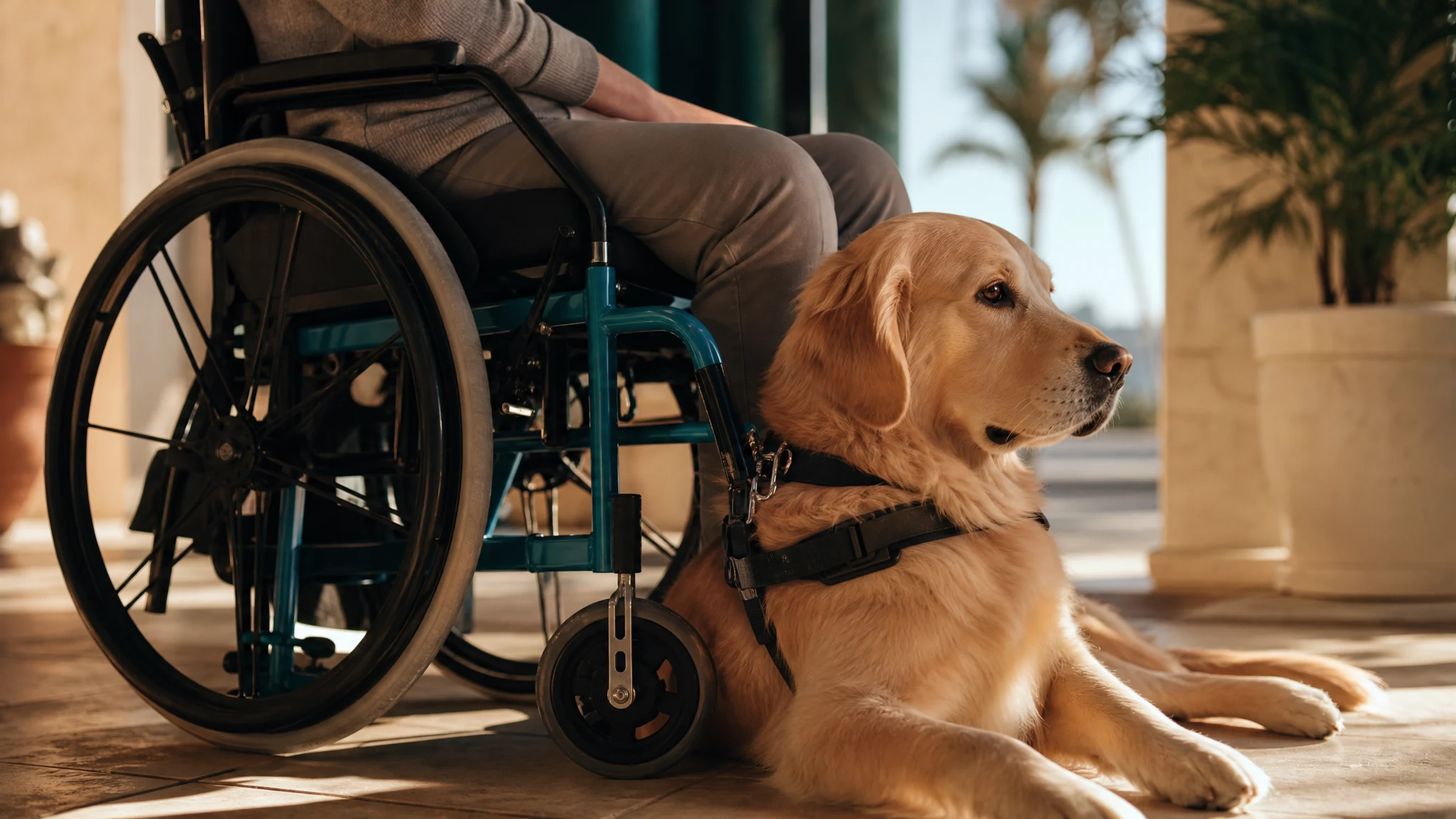
Any domesticated animal that provides comfort can be an emotional support animal, but Florida's heat, humidity and storm season decide which animals are comfortable here. A dog that thrives in Vermont may struggle on an Orlando sidewalk in July.
This page covers what type of animals are the best options for ESA work in Florida, considering common housing types, the climate, and hurricane-risk considerations.
Florida has long summers, saturated air, a storm season and a large number of condominiums and HOA communities. Those facts decide more about how an animal will live here than a favorite breed does.
Federal guidance does not limit an ESA to dogs. Dogs and cats are by far the most common, and this page also covers rabbits, guinea pigs and birds. HUD's notice treats animals other than dogs as a more individualized assessment, and unusual species may face more scrutiny.
One boundary before anything else. Whether an ESA is therapeutically appropriate for you is a decision for a licensed clinician, who evaluates each person individually. No website can decide that for you. Our complete guide to emotional support animals in Florida covers the wider legal picture.
Choose the animal you can keep comfortable in the summer and in hurricane season. Your favourite breed may be a Husky, but they may not thrive in Florida.
Dogs cool themselves mainly by panting, and panting works less well when the air is already saturated with moisture. That is the core Florida problem. Veterinary sources describe short-muzzled breeds such as Bulldogs and Pugs as being at higher risk of heat illness, and dogs with dense double coats, like Huskies and Malamutes, can struggle in the humidity found from Pensacola to Key West.
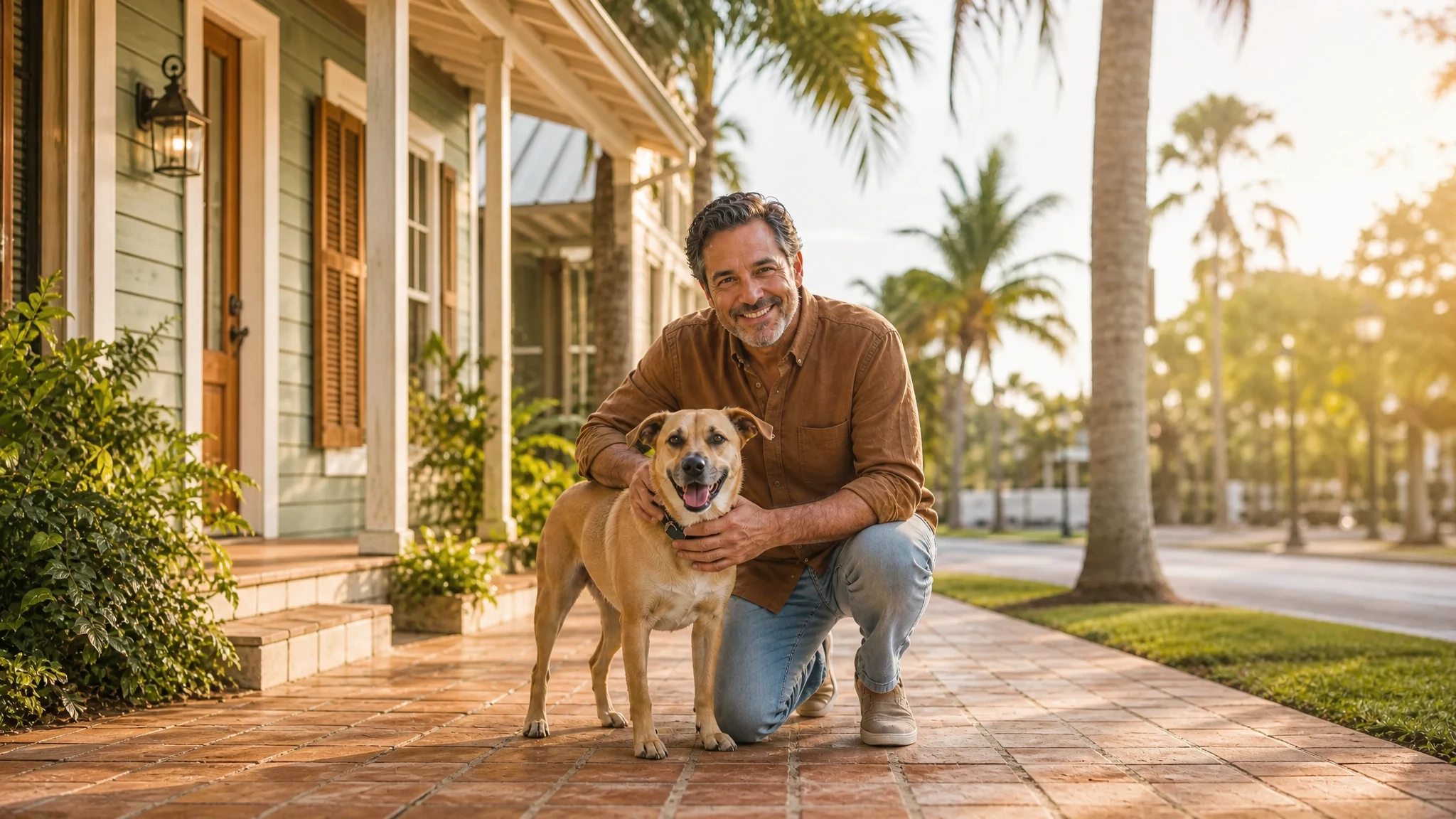
Breeds often described as better suited to warm climates include Greyhounds, Whippets, Vizslas, Boxers, Labrador Retrievers and Catahoulas, along with many short-coated shelter mixes, though individual dogs vary. See emotional support dogs in Florida for more.

Asphalt and concrete can become much hotter than the air above them. Many veterinarians suggest pressing the back of your hand to the surface for several seconds. If it is uncomfortable for you, it is likely too hot for paws. In Jacksonville, Fort Lauderdale and Cape Coral, the safest windows are early morning and evening.
Be honest about your own routine, too. Florida has no true off-season for walking, and an animal that needs two long walks a day will keep you outside in demanding conditions.
There is no single best animal. This table sets the groups side by side in Florida terms.
| Animal | What Works in Florida | What to Watch |
|---|---|---|
| Dogs | Short-coated, moderate-energy dogs cope best with Florida summers. Walks in early morning and evening, with shade and water. | Short-muzzled and double-coated dogs overheat more easily. Watch hot pavement, leash laws, heartworm and fleas. |
| Cats | Indoor cats suit air-conditioned apartments and condos, with no daily walks in the heat. Short-haired cats may be more comfortable. | Fleas can thrive year-round in humid regions. A power outage in July changes a cat's comfort quickly. Cats bolt under stress. |
| Rabbits, Guinea Pigs, and Birds | Can be calming where space is tight, if they are kept cool and out of direct sun. | Housing providers assess animals other than dogs more individually, and unusual species may face more scrutiny. |
| Any Animal | A microchip with current contact details, a veterinarian who knows the animal, and a carrier or crate ready to go. | Condo and HOA documents may limit pets by size, breed or number. |
A dog asks the most of you in this climate. Leash ordinances in Broward, Hillsborough and Duval counties apply to emotional support dogs as to every other dog.
For many Floridians an emotional support cat is the animal that fits the way we live here: indoors, in air conditioning, often in a condo where space is limited and the afternoon heat is not. Ask your veterinarian about year-round flea prevention, and speak with your physician before adopting if anyone in the household has asthma, a cat allergy or a weakened immune system. See emotional support cats in Florida.

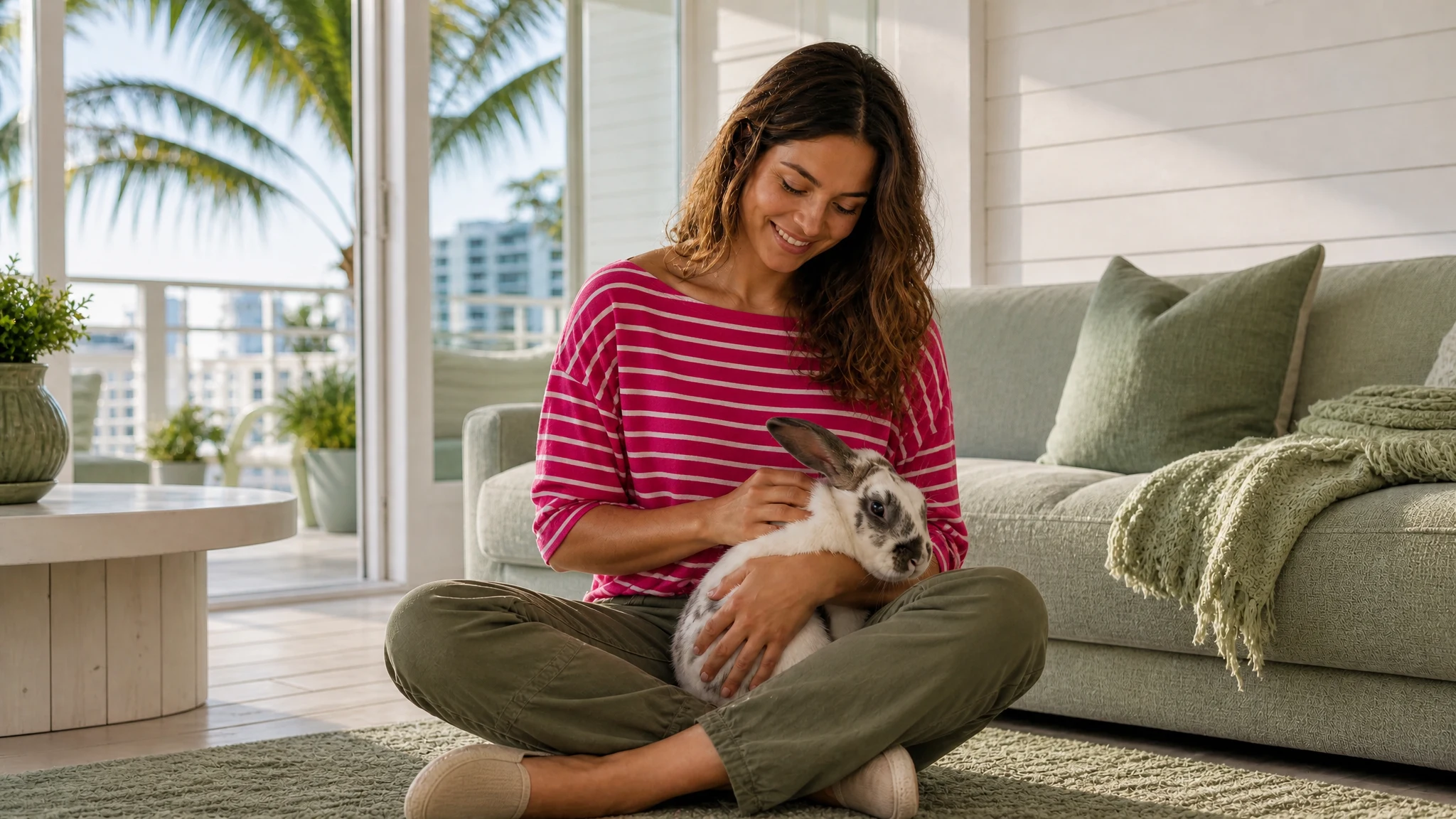
Rabbits, guinea pigs and birds can be a good fit where space is tight, as long as they are kept cool and out of direct sun. Plan where the animal lives during the hottest hours of the afternoon.

Because a housing provider may look harder at an animal that is not a dog or cat, be ready to describe the animal's care plainly.
Registration works per animal, so the details you enter depend on who is being registered. Here is how the same three steps play out for a dog, a cat or a small companion, and where the choice of animal changes what you do.
Start with the requirement that does not change by species: to register, you must be eligible for an emotional support animal and have an ESA letter. Registration is optional, it is not a substitute for the letter, and it gives you no ESA rights and no additional rights. If you are still choosing an animal, finish that decision and the letter first.
In step two you submit the animal's name, type, breed, sex, birthday and weight. Those fields are the same for a Labrador, a short-haired cat or a rabbit, but your answers will look different. A dog's weight is the number a condo board is most likely to ask about elsewhere. A cat's entry is usually short and simple. For a small companion, the type and breed fields do the work of telling a finder what kind of animal they are holding.
| Animal | What You Enter | Worth Having Ready |
|---|---|---|
| Dog | Name, type, breed, sex, birthday, weight | Microchip number if chipped, and a clear photo of the dog |
| Cat | Name, type, breed, sex, birthday, weight | Microchip number if chipped, and a photo in good light indoors |
| Small companion | Name, type, breed, sex, birthday, weight | Microchip number only if your animal has one, and a photo of the animal |
The microchip number is optional. If your animal has one, add it, because a shelter or anyone who finds the animal can look it up in our ESA and lost pet recovery database by microchip number or ID number and reach you. If your animal has no chip, the ID number still works as a way into the record. After you purchase, we email you a link to upload the photo, so you do not need it at the first step.
Choose a photo that a stranger could match to the animal in a shelter kennel: the whole animal, in daylight, facing the camera. That matters more for a dog or cat that looks like many others than for an unusual animal, and it matters for a rabbit that spends most of its day in a hutch.
Registering a cat does not make a condo treat it differently from a dog, and registering a small companion does not remove the closer look a housing provider may give an animal other than a dog. A landlord may look up the registry to see you worked with a legitimate company, but no landlord is required to use it or accept it. The letter, and a clear description of the animal's care, still carry the request. You will also receive an animal ID and certificate by mail. They identify the animal and carry no legal housing rights.
Registration is lifetime and per pet. If you share a home with more than one animal, each needs its own record and its own supporting letter, as our guide on how many emotional support animals you can have in Florida explains.
Florida has an unusually large number of condominiums, HOA communities, and tourist and snowbird rental markets, from Naples to Daytona Beach. Many of them limit pets by size, breed or number. Condo associations in Fort Lauderdale and St. Petersburg frequently adopt weight caps, and HOAs in The Villages and Lee County may list restricted breeds.
For an ESA, those pet rules are not the end of the conversation. Under the Fair Housing Act, as explained in HUD's notice FHEO-2020-01, housing providers are expected to assess an accommodation request individually rather than apply a blanket breed, size or weight rule. A provider may still deny a request where the specific animal poses a direct threat to the health or safety of others that cannot be reduced by other means, or would cause substantial physical damage to the property. That decision is supposed to rest on evidence about the individual animal, not a breed's reputation.

Even so, we advise choosing with the building in mind. A smaller animal is easier to carry or crate in an evacuation, and temperament matters more than a label. Common areas can still have leash and conduct rules, so read your community documents. See breed and weight restrictions versus emotional support animals, whether an HOA or condo association can deny an ESA and ESA rules for Florida apartment tenants.
Florida sets no fixed number. Each animal needs a documented disability-related need, and a second animal draws closer scrutiny. See how many emotional support animals you can have in Florida.
Under HUD guidance, a pet deposit or pet rent generally does not apply to an assistance animal approved as a reasonable accommodation. You can still be held responsible for damage the animal causes.
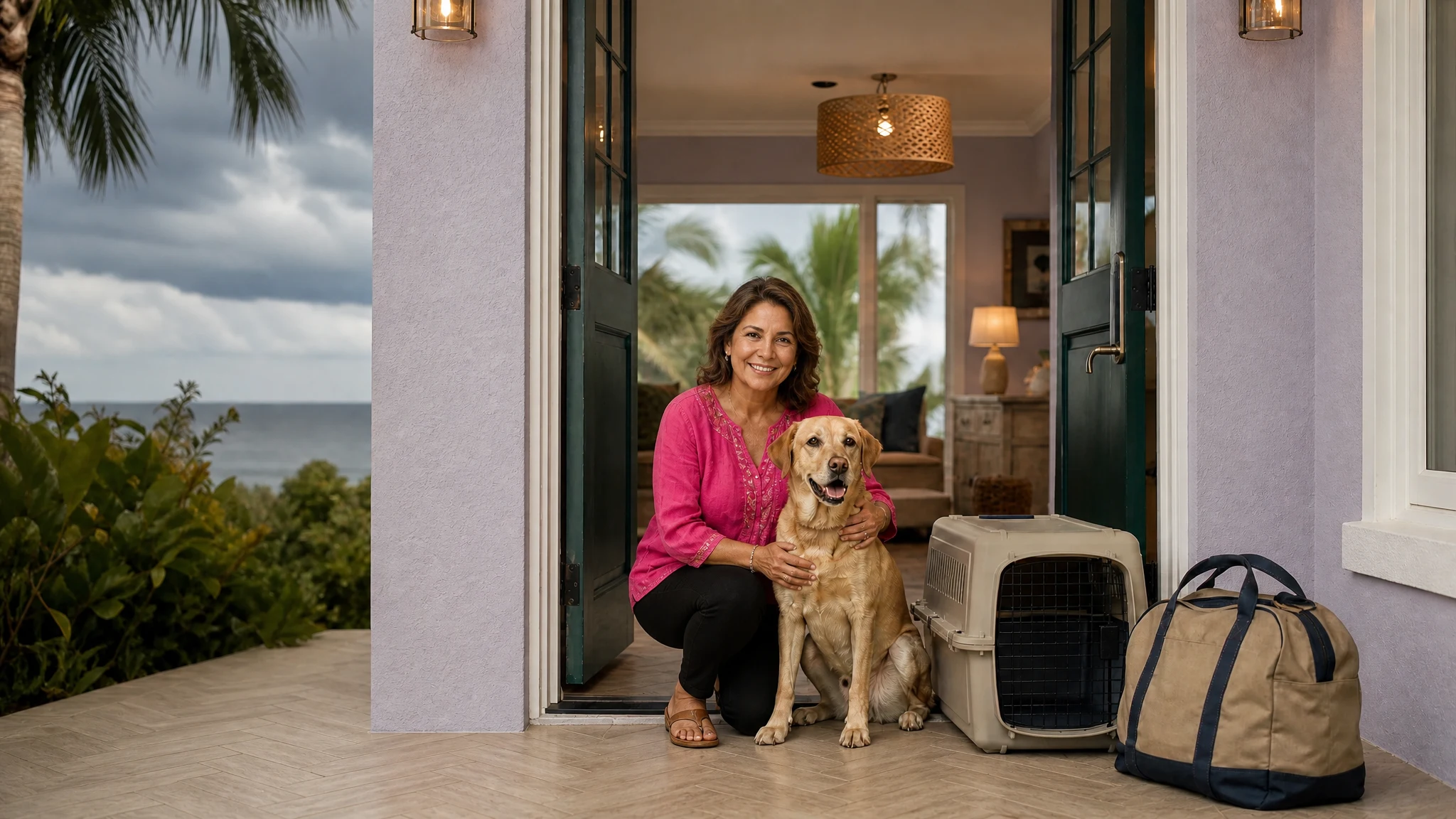
Hurricane season runs from June to November. In Pinellas County, Southwest Florida, the Keys and along both coasts, evacuations can come quickly, and the plan has to include the animal. Many public shelters have limited pet policies.
Frightened animals bolt. Shelters from Pensacola to Miami can fill quickly with found animals, and a microchip plus a lost-pet record gives them more than one way to reach you. This is the reason lost-pet recovery leads the list of our registration benefits: when you register an animal, it is added for life to our ESA and lost-pet recovery database, which may help shelters and finders reunite you. It complements a microchip and does not replace one.
A lost-pet record only helps if it exists before the storm. Keep microchip contact details current.
Hurricane season is the strongest practical reason to think about registration, and the least dramatic one. The benefit is a record that exists before anything goes wrong. This section covers what that record does and what it leaves to you.
When you register an animal, it is added for life to our ESA and lost pet recovery database. A shelter, a veterinary office or a neighbor who finds your animal can look it up by microchip number or ID number and reach you. In a Florida evacuation, that is a second route to you if a tag is lost or a microchip has old contact details.
It complements a microchip and does not replace one. The chip is what a shelter scans first, so keep the contact details on the chip current, and treat the registration as the backup that speaks for the animal when you cannot.
Frightened animals bolt, and in a storm week you may be in a hotel two counties away or at a relative's home out of state, while your animal is found near your Pinellas, Miami-Dade or Southwest Florida address. A record that carries a phone number you answer, not only a street address, is what lets someone reach you. Cats are the animals most likely to bolt under stress, and a small companion that escapes from a carrier is hard to identify without a photo and a record.
It does not guarantee your animal will be found, and it does not secure a place in a public shelter or a hotel. Pet policies differ by county and by property, so choose your destination early.
None of this is a housing matter. If you later need to ask a landlord or association for an accommodation, the letter from a licensed health care or telehealth practitioner is what supports the request, and Florida Statute 760.27 says an online registration alone is not sufficient documentation.
The most useful thing a Florida ESA resource can do is be clear about limits. An ESA is protected in one setting: housing. Everything else people assume, from restaurant access to airline cabins, is either wrong or no longer true.
The federal Fair Housing Act and Florida Statute 760.27 apply to housing, including condo associations and HOAs. See Florida ESA housing laws and what landlords must allow for what a housing provider may ask.
Florida's public access statute, s. 413.08, applies to service animals, so an ESA is treated as a pet in most public settings. Restaurants, shops and hotels set their own policies. A vest, ID card or certificate carries no legal weight for public access. On airlines, the U.S. Department of Transportation removed ESAs from the Air Carrier Access Act in 2021, and airlines now treat them as regular pets. Our guide to taking an emotional support animal into public places.
Because public places are optional for an ESA, staying home on the hottest afternoons is often the kinder choice.
A service animal is individually trained to do work or perform tasks for a person with a disability. An ESA provides comfort through presence and has no task training requirement. A service dog's footing is housing plus public access, while an ESA's is housing alone. Section 413.08 makes knowingly misrepresenting a pet as a service animal a second-degree misdemeanor. See ESA versus service dog in Florida.
Housing protection comes with obligations, and a housing provider may take action if an animal's behavior causes problems after approval.
A dog that disturbs neighbors can still lead to lease or community-rule consequences, so training, exercise and routine matter.
Housing rights come only from a letter written by a licensed health care or telehealth practitioner. Registration is a separate, optional service. It is not a substitute for an ESA letter, and it gives you no ESA rights and no additional rights. Florida Statute 760.27 says an online registration alone is not sufficient documentation.
Florida Statute 760.27 requires the issuing clinician to be licensed in Florida or to have an established prior in-person relationship with you, and the clinician must have personal knowledge of your disability-related need. An online-only provider licensed in another state cannot issue a valid Florida ESA letter. A legitimate letter is generally signed and dated, on the clinician's letterhead, with license type, state and number. See Florida ESA letter requirements and who can write one.
A clinician evaluates you individually, may decline to issue a letter, and never approves automatically. Be wary of any service that promises approval before you have spoken to anyone. Give your housing provider a copy, not the original, and keep a record of what you sent.
To register, you must be eligible for an emotional support animal and have an ESA letter. In return, you receive practical benefits, and none of them are legal rights:
Registration takes three steps: submit your contact information and confirm you meet the ESA requirements, submit your animal's information with a photo, and receive your animal ID and certificate by mail.
It is not a legal requirement in Florida. If lost-pet recovery in hurricane season matters to you, it is a practical add-on. Our explainer on what ESA registration is and is not in Florida sets out the limits.
Do you still have questions about what animal is the best choice for your ESA in Florida? We answer the most common ones below.
The steps are the same for each animal: submit your contact information and confirm you meet the ESA requirements, submit the animal's information and a photo, and receive the animal ID and certificate by mail. What changes is the information you enter, such as the animal's type, breed and weight.
No. The microchip number is optional. If your animal has one, adding it lets a shelter or finder look the animal up in our ESA and lost pet recovery database. The ID number also works for lookup, and a microchip does not replace keeping your contact details current.
No. To register you must be eligible for an emotional support animal and have an ESA letter. Registration is optional, is not a substitute for the letter, and gives no ESA rights or additional rights.
Each registered animal is added for life to our ESA and lost pet recovery database. A shelter or anyone who finds the animal can look it up by microchip number or ID number and reach you. It complements a microchip and does not guarantee the animal will be found.
No. Registration gives no ESA rights or additional rights. A landlord may look up the registry but is not required to use or accept it. Housing requests rest on a letter from a licensed health care or telehealth practitioner, and a provider may still assess an animal other than a dog more closely.
Keep the animal ID and certificate with vaccination records, medications, a carrier or crate, and a recent photo of you with your animal. The ID and certificate identify the animal and carry no legal housing rights. Confirm the microchip and registration contact details are current.
Our newest and most relevant guides in this topic, written for Florida renters and owners.

Registering an emotional support cat in Florida: what you enter, the optional microchip, the photo, lost-cat recovery in storms, and what stays the same.

Registering your emotional support dog in Florida: what you enter, how lost-dog records help after storms, and what registration does not change.

Hurricane season planning for a Florida emotional support animal: go-bag, pet shelter limits, lost pet recovery and what an ESA letter does not do.

How the lost pet recovery database in Florida ESA registration works: what the record holds, how a finder reaches you, and what it cannot promise.

Registering a rabbit, bird or other small emotional support animal in Florida: the form fields, the photo, and what registration does not change.

Short answer: generally no. Under Florida law, an emotional support animal (ESA) does not carry a public access right, so restaurants, shops, and hotels in Miami, Orlando…

Florida owners often use "service animal" and "emotional support animal" as if they meant the same thing. Under federal and Florida law they do not. The two differ in…

An emotional support animal in Florida occupies a narrow but genuinely important legal space: it is a companion animal that a licensed clinician has determined may be…

For many Floridians, an emotional support cat is the animal that fits the way we live here: indoors, in air conditioning, often in a condo or HOA community where space is…

An emotional support dog in Florida lives a different life from one in Vermont or Colorado. The pavement in Orlando in July can injure a paw in minutes. In Miami-Dade, an…
Start with our Florida intake. A licensed clinician evaluates each person individually, and approval is never automatic.
Register My Florida ESABrowse All Florida ESA GuidesRegistration is optional. It is not a substitute for an ESA letter and gives no ESA rights or additional rights; a letter from a licensed health care or telehealth practitioner is what carries housing rights.