Florida renters, condo owners and HOA residents ask us the same thing: if the building says no pets, can I still live with my emotional support animal? The answer usually turns on one document and a handful of rules.
19 min readUpdated November 15, 2026Florida-specific
This guide pulls the housing picture together: the Fair Housing Act, HUD notice FHEO-2020-01 and Florida Statute 760.27, what a housing provider may ask, how to write the request, what it can cost and when a refusal is lawful. It also says where our optional registration helps and where it does not.
Key Takeaways About ESAs in Florida
An emotional support animal is a reasonable accommodation in housing, not a pet, so a no-pets rule starts the conversation instead of ending it.
Housing rights come only from a letter from a licensed health care or telehealth practitioner who is Florida-licensed or has an established prior in-person relationship with you.
A landlord may verify the letter but may not ask for your diagnosis, and generally may not charge a pet deposit or pet fee. You stay responsible for damage.
Breed and weight limits do not decide a request on their own. Lawful refusals rest on specific grounds.
Registration is optional. Its first benefit is lost-pet recovery, and no landlord is required to accept it.
Optional registration can sit beside your letter in a housing request as friendly context, but it carries no housing rights, no landlord is required to accept it, and legal support for Fair Housing Act housing matters is the part that matters most if a request is denied.
Why an ESA Letter, Not the No-Pet Rule, Matters
Three sources do most of the work in Florida. The federal Fair Housing Act requires housing providers to make reasonable accommodations in rules and policies when an accommodation may be necessary for a person with a disability to use and enjoy a home. A no-pets policy is a rule, so a request for an assistance animal asks the provider to consider an exception. That is why an emotional support animal is not legally a pet in housing.
The second source is HUD notice FHEO-2020-01, Assessing a Person's Request to Have an Animal as a Reasonable Accommodation Under the Fair Housing Act. It tells providers to evaluate requests individually and warns that paperwork from sites that sell certificates or registrations to anyone who pays is not, by itself, enough.
The third is Florida Statute 760.27. In plain terms it lets a landlord request reliable information from a licensed practitioner, bars pet fees and pet deposits for an emotional support animal, allows denial for a direct threat or substantial physical damage, and says an online registration alone is not sufficient documentation. Our overview of Florida ESA housing laws and what landlords must allow walks through each point.
Our Position on Registration
Registration is optional and is not a substitute for an ESA letter. It gives you no ESA rights and no additional rights. A letter from a licensed health care or telehealth practitioner is what carries housing rights.
What a Landlord, Condo Board or HOA May Ask For
When your disability-related need is not obvious, a housing provider may ask for reliable information from a licensed health care or telehealth practitioner. In practice that is your ESA letter. Statute 760.27 expects the practitioner to be licensed in Florida or to have an established prior in-person relationship with you, so an online-only provider licensed elsewhere cannot issue a valid Florida letter. See who can write an ESA letter in Florida and how Florida landlords verify an ESA letter.
What Is Allowed for an ESA in Florida
Reading the letter for the practitioner's license type, license number, date and contact details.
Checking the license through the Florida Department of Health lookup, which verifies the clinician, not you.
Contacting the clinician's office to confirm the letter is genuine. Many offices confirm only that, since clinicians generally cannot discuss care without your written authorization.
Enforcing rules that apply to every resident, such as waste cleanup and noise.
What Is Not Allowed for an ESA in Florida
Asking for your diagnosis, symptoms, treatment history or medical records.
Demanding a particular form, a notarized statement or specific wording.
Requiring a registration, ID card, vest or certificate.
Insisting on a demonstration of tasks. Emotional support animals are not required to have task training.
Charging a pet deposit or pet fee solely because the animal is an approved ESA.
Singling you out because you made the request.
Delay Can Count as a No
HUD guidance treats unreasonable delay as a potential denial. If a request sits unanswered, follow up in writing and keep the dates.
Honesty carries legal weight too: Statute 817.265 addresses knowingly giving false information to obtain ESA documentation, as Florida penalties for fake ESA letters explains.
How to Make an ESA Request, Step by Step
Timing matters more than wording. Ask before you sign the lease or before the animal moves in, never after a pet-violation notice. Our tenant's playbook for Florida apartments follows the same order.
A calm written request usually goes further than an argument at the leasing desk.
Get the Right LetterSpeak with a practitioner who is Florida-licensed or has a prior in-person relationship with you. The clinician decides whether an ESA is therapeutically appropriate, and approval is never automatic. Florida sets no expiration date, but landlords often prefer a recent letter (do ESA letters expire in Florida).
Find Out Who DecidesRead your lease and any condo or HOA rules. The request may belong with the leasing office, a management company's compliance team or an association board.
Write a Short, Dated RequestSay you are requesting a reasonable accommodation to live with an assistance animal, name the animal, attach the letter and send it by email or certified mail. You do not need to share a diagnosis.
Ask That Pet Charges Not ApplyNote politely that you want the animal treated as an accommodation, not a pet, with no pet deposit, pet rent or pet fee.
Keep the RecordOffer vaccination records and a recent photo, and save every reply. A provider's own form is fine to fill out, but it should not be the only acceptable route.
Where ESA Registration Fits in a Florida Housing Request
A housing request is built on the letter. Registration comes after it, never before: to register you must be eligible for an emotional support animal and have an ESA letter. So the practical question for a Florida renter, condo owner or HOA resident is not whether to register instead of sending a letter, but whether the registration record adds anything useful beside the letter you already have.
What to Put in a Florida ESA Housing Request
A short, dated message to the landlord, condo board or HOA asking for a reasonable accommodation to live with an assistance animal.
The animal's name and type, so the request is about one specific animal.
Your ESA letter from a licensed health care or telehealth practitioner who is Florida-licensed or has an established in-person relationship with you.
Vaccination records and a recent photo, if you choose to offer them.
Your contact details and a request for a written reply.
Nothing on that list is optional in spirit except the last extras. Registration documents are not on it because no provider may require them, and a request that depends on them is weaker than one that does not.
How an ESA Registration Record Can Support the Request
If you have registered, the pieces can sit beside the letter as friendly context. Here is what each one is and how it relates to a Florida housing request.
Registration Piece
What It Is
Role in Your Request
Registry listing
A listing a landlord may look up to see you worked with a legitimate company.
Optional context. No landlord is required to use it or accept it.
Animal ID card and certificate
Documents that identify the animal and carry no legal housing rights.
Something to show a front desk or neighbor, not proof of your need.
Record for each pet
Lifetime registration in our ESA and lost pet recovery database, searchable by microchip or ID number.
Helps a shelter or finder reach you if the animal gets out. It does not decide a request.
$25 off a consultation
A discount on an ESA letter consultation for registered members.
Unrelated to the request itself. The clinician decides, and approval is never automatic.
If a landlord asks how you know the letter came from a real clinician, the listing is one more thing they may look at. If the landlord has never heard of it, do not argue. Point them back to the letter, which is the document that carries housing rights under the Fair Housing Act and Statute 760.27.
A Sentence You Can Use
In your message, mention registration only after the letter, in one plain sentence such as: "I have also registered my animal, and you are welcome to look at the listing, but you are not required to use it." That keeps the focus where the law puts it.
Because an approved assistance animal is an accommodation and not a pet, Statute 760.27 says no extra compensation may be required for the animal, which is why a pet fee or pet deposit generally does not apply to it. Treat any separate monthly pet rent the same way, and raise it with a Florida-licensed attorney or local legal aid before you agree. The rule covers the approved animal only: normal pet charges may still apply to an ordinary pet you also keep. Our guide to Florida rental laws and ESA deposits has more.
Charge
Allowed for an ESA?
Notes
Pet deposit or pet fee
Generally no
Statute 760.27 says no extra compensation may be required for the animal.
Monthly pet rent
Generally no
Treated like other extra compensation: ask an attorney or local legal aid before agreeing.
Standard security deposit
Yes
The same deposit every tenant pays.
Charges for actual damage
Yes
You remain responsible for damage the animal causes.
Normal wear and tear
No
A landlord generally cannot bill you for it.
Move-Out Timing for ESA Deposits in Florida Under Section 83.49
Generally, a landlord who is not making a claim must return the deposit within 15 days after you vacate. A landlord who intends to claim part of it must send written notice by certified mail within 30 days stating the reason, and you then generally have 15 days to object in writing.
Document Move-In Day
Photograph and video floors, doors and screens on move-in day, and repair a scratched door or torn screen promptly. They are your best protection against an inflated damage claim.
ESA Breed and Weight Restrictions in Florida
Condo associations in Fort Lauderdale and St. Petersburg frequently adopt weight caps, and HOAs in The Villages and across Lee County may list restricted breeds. None of that automatically overrides a reasonable accommodation request. HUD's FHEO-2020-01 notice states that a breed, size or weight limit is not a basis for denying an assistance animal request on its own, because the assessment looks at the individual animal. See our guide to breed and weight restrictions vs. emotional support animals.
Heat-suited animals tend to cope better with long Florida summers.
"Our insurer will not cover that breed" is one of the most common objections in Florida, where property insurance is expensive. HUD's guidance indicates that an insurer's breed restriction is generally not, by itself, a sufficient reason to deny a request. Ask in writing for the exact policy language, then offer records about your individual animal: veterinary history, vaccinations and any training information.
Choose an Animal the Climate Suits
Florida's heat and humidity are hard on thick-coated, flat-faced and very large dogs, and a smaller animal is easier to carry or crate in a hurricane evacuation. Temperament matters more than a label.
When Can an ESA Request Legitimately Be Refused
A landlord can say no, but only for a narrow set of reasons. A personal preference, a flat no-pets rule, a breed or weight limit and a pet deposit are not among them. Our guide on when a landlord can legally reject an ESA in Florida covers each ground.
The housing is exempt. The Fair Housing Act has limited exemptions, commonly certain owner-occupied buildings with a small number of units and certain single-family homes rented by an owner without a broker. Confirm any claimed exemption with a Florida-licensed attorney.
The specific animal is a direct threat. Statute 760.27 allows denial where the animal poses a direct threat to the health or safety of others that cannot be reduced by a reasonable accommodation. The proof must be about that animal's conduct, such as a documented bite, not breed stereotypes.
The animal would cause substantial physical damage to the property of others. Ordinary wear or normal shedding does not meet that bar.
The request is an undue burden. A provider may refuse a request that would impose an undue financial and administrative burden. This is a high bar.
The documentation is unreliable or missing. Online-only out-of-state providers and instant-download certificates do not meet Florida's standard.
Ask for the Reason in WritingA flat no-pets rule calls for a different response than "the documentation is not reliable."
Check Your LetterConfirm the practitioner is Florida-licensed or had a prior in-person relationship with you. If your paper is only a registration or an out-of-state online letter, a fresh evaluation with a Florida-licensed clinician is often the cleanest fix.
Offer Reasonable AssurancesVaccination records and an explanation of how the animal is supervised can answer a safety concern without conceding it.
Escalate if NeededOptions include a complaint to HUD or the Florida Commission on Human Relations, or a consultation with a Florida-licensed attorney or legal aid office. Time limits apply, so do not wait.
What ESA Registration Never Replaces in Florida Housing
Most housing disputes we hear about are not about registration at all. They turn on the letter, the timing or the landlord's reason. Registration is useful in its own lane, and it helps to know exactly where that lane ends before a request goes wrong.
ESA Registration Cannot Fix a Missing or Weak Letter in Florida
If a Florida landlord says your documentation is unreliable, registering will not change that answer. Statute 760.27 says an online registration alone is not sufficient documentation, and a landlord may reasonably ask whether the practitioner is Florida-licensed or had a prior in-person relationship with you. If the letter is the problem, the clean fix is a fresh evaluation with a Florida-licensed clinician, as covered in who can write an ESA letter in Florida. Registration also cannot turn a lawful refusal, such as a documented direct threat from a specific animal, into an approval.
How ESA Legal Support Fits a Florida Housing Dispute
Registered members get access to a legal support team if their Fair Housing Act housing rights are violated. It unlocks once you receive your animal ID and certificate in the mail, so it is not something to sign up for in the middle of a dispute. Three limits matter:
It covers housing matters only.
We are not a law firm, and there is no guarantee of any outcome.
It sits beside, not in place of, your other options, such as a complaint to HUD or the Florida Commission on Human Relations, or a Florida-licensed attorney or legal aid office.
Whatever route you choose, your own record does the most work: the dated request, the letter, every reply and the dates they arrived. Our guide to how Florida landlords verify an ESA letter shows what a provider may check on its side.
Registration and ESA Rights Outside Housing in Florida
The ID card and certificate do not open doors outside the home either. Airlines treat emotional support animals as pets, and public access belongs to service animals, which we do not register. Do not present the card at a restaurant, store or airport counter as if it gave your animal access. That kind of misuse invites exactly the skepticism that makes a landlord distrust the rest of your paperwork.
Do Not Register Before You Have the Letter
Registration is only for people who are eligible for an emotional support animal and already have an ESA letter.
In short, the letter carries the housing rights, a clear request carries the conversation, and registration supports the animal's safety and your records. It never stands in for either of the first two.
ESAs in Condos, HOAs, Senior Communities and College Housing
Condos and HOAs for ESAs in Florida
Associations organized under Chapter 718 (condominiums) and Chapter 720 (homeowners' associations) generally function as housing providers under the Fair Housing Act and Statute 760.27. A board must treat your request as an accommodation request and cannot answer with a blanket reference to the declaration. Read the governing documents so your request reaches the right person. Our guide on whether an HOA or condo association can deny an ESA walks through the process.
Senior Communities for ESAs in Florida
Florida 55-plus communities typically operate under the federal Housing for Older Persons Act, which lets a community limit residency by age. That exemption concerns age and familial status, not disability, so a community in The Villages, Boca Raton or Naples must still evaluate an assistance animal request individually. Assisted living facilities can differ, so ask the administrator for the accommodation process before you move in. See our 55-plus guide.
College Housing for ESAs in Florida
HUD's framework is generally understood to reach dormitories and university apartments, but each school runs its own process, and we make no claims about any particular university. Most route requests through a disability or accessibility services office, then residence life. Start months before move-in and do not bring the animal before the school confirms your accommodation. See our college housing guide.
City by City: ESA Housing in Miami, Orlando, Tampa, Jacksonville and Fort Lauderdale
Many buildings answer to both a landlord and a condo association, so decide who needs to hear from you.
Miami-Dade Commission on Human Rights or HUD
Orlando
Large communities often route requests to a central compliance contact. Around Kissimmee, long-term and seasonal housing mix.
HUD's fair housing office and legal aid
Tampa
Gulf coast storm and flood exposure, including Davis Islands and Pinellas County.
Hillsborough County Emergency Management
Jacksonville
Many military households tied to Naval Air Station Jacksonville and Naval Station Mayport.
Jacksonville Human Rights Commission or HUD
Fort Lauderdale
Canal-front condos and seasonal rentals. Ask whether the owner, manager or board decides.
Broward County's civil rights office
Storm Season and Your ESA Housing Plan in Florida
Hurricane season runs from June to November. Your letter supports an accommodation request, but it does not guarantee a space in an emergency shelter or hotel, so plan as though your animal will be treated like any other pet outside your home. Look up your evacuation zone and shelter options early.
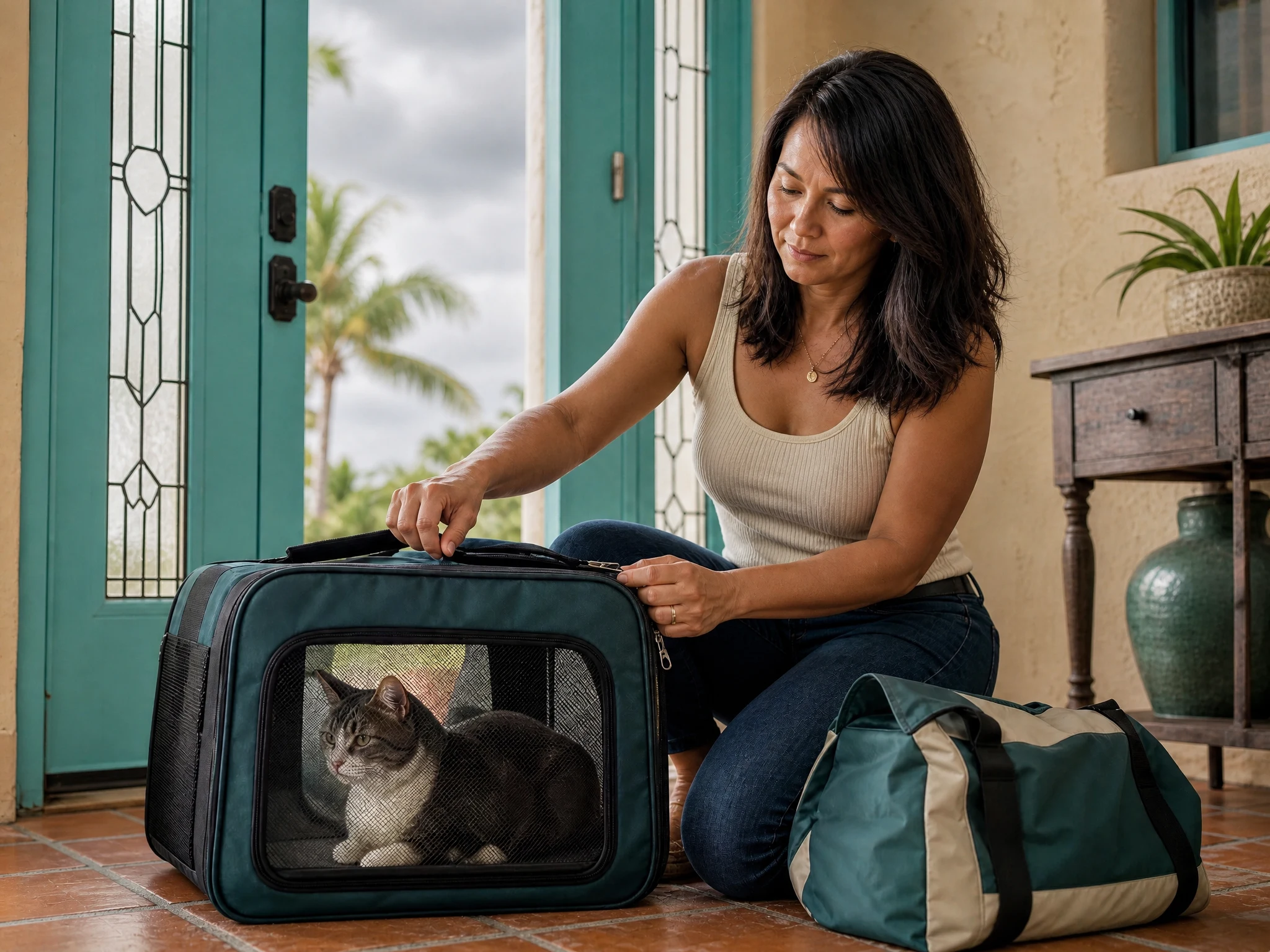
Pack the carrier, records and a recent photo before the forecast turns.
Keep your letter in a waterproof folder in paper and digital form, because storm damage can force a move and a fresh request to a new landlord. In summer heat, walk early or late. A pet rule cannot be used to defeat the accommodation.
Where ESA Registration Helps and Where It Does Not
Registration is a separate, optional service. It is not a substitute for an ESA letter and gives you no ESA rights and no additional rights under the Fair Housing Act or Statute 760.27. To register you must be eligible for an emotional support animal and have a letter.
Lost-pet recovery comes first. Lifetime registration per pet lets shelters and finders work to reunite you with an animal that bolts during a storm or evacuation.
An animal ID card and certificate to show neighbors or front-desk staff. They carry no legal housing rights.
$25 off an ESA letter consultation. The clinician decides, and the discount is not a promise of approval.
Legal support if your Fair Housing Act rights are violated. It covers housing rights only, and we are not a law firm.
A registry listing a landlord may look up to see that you worked with a legitimate company. No landlord is required to use the registry or accept it.
Contact Information and EligibilitySubmit your contact information and confirm you meet the ESA requirements.
Animal Information and PhotoSubmit your animal's information and upload a photo.
ID and Certificate by MailReceive your animal ID and certificate by mail, and unlock lost-pet recovery and legal support.
Lead With the Letter
Send the letter first and offer the ID card only as friendly context. A board that ignores it is not doing anything wrong.
Frequently Asked Questions About ESA Housing in Florida
Do you still have questions about ESA housing in Florida? We answer the most common ones below.
Should I Attach My ESA Registration to a Florida Housing Request?
Send the letter first. You may mention your registration afterward as friendly context, but no Florida landlord, condo board or HOA is required to look at it or accept it, and the request does not depend on it.
Can a Florida Landlord Refuse My ESA ID Card?
Yes. The ID card and certificate identify the animal and carry no legal housing rights. A landlord may look up the registry listing to see you worked with a legitimate company, but the letter is what carries housing rights.
Does ESA Registration Let a Florida Landlord Verify My Letter?
No. A landlord verifies the letter through the practitioner's license and contact details. The registry listing is only a place a landlord may look to see you worked with a legitimate company, and Statute 760.27 says an online registration alone is not sufficient documentation.
Can a Florida Condo Board Charge a Pet Fee for My ESA?
Generally not. Under HUD's guidance and Statute 760.27, a housing provider, including a condo or homeowners' association, generally may not charge pet fees or deposits for an approved assistance animal. You remain responsible for damage the animal causes.
Will an Out-of-State Telehealth Letter Work for a Florida Rental?
Not reliably. Statute 760.27 expects the practitioner to be licensed in Florida or to have an established prior in-person relationship with you.
Does ESA Legal Support Help If My Florida Housing Request Is Denied?
Registered members have access to a legal support team if their Fair Housing Act housing rights are violated. It covers housing matters only, we are not a law firm and no outcome is guaranteed. A complaint to HUD or an attorney consultation remain separate options.
Keep Reading
Related ESA Housing Laws Guides
Our newest and most relevant guides in this topic, written for Florida renters and owners.
If you do not yet have an ESA letter, begin with our Florida intake, where a licensed practitioner evaluates each person individually. Approval is never automatic.
Registration is optional. It is not a substitute for an ESA letter and gives no ESA rights or additional rights; a letter from a licensed health care or telehealth practitioner is what carries housing rights.