
Emotional Support Animals in Tampa: Renting, Landlords and Letters
Renting in Tampa with an emotional support animal comes down to one question: what documentation does a landlord reasonably review under the federal Fair Housing Act and Florida Statute 760.27? This guide covers the ESA letter that housing requests rest on, the separate and optional registration that supports lost-pet recovery, and the Gulf coast preparation that makes any Tampa lease easier to live with. It is written for tenants in South Tampa, Brandon, Riverview, Carrollwood and the wider Hillsborough County area.
Registration is not an ESA letter. Registering an emotional support animal does not substitute for an ESA letter, and it gives you no ESA rights or additional rights under the Fair Housing Act or Florida Statute 760.27. Housing rights come only from a letter written by a licensed health care or telehealth practitioner. Florida Statute 760.27 also provides that an online registration alone is not sufficient documentation. To register, you must also have an ESA letter and be eligible for an emotional support animal.

What You Need Before You Start Renting With an ESA in Tampa (Materials)
- A Florida-licensed clinician. Florida Statute 760.27 contemplates that the clinician who supports your request is licensed in Florida, or has an established prior in-person relationship with you. Online-only providers licensed in other states cannot issue a valid Florida ESA letter. Typical credentials include an LCSW, LMHC, LMFT, psychologist, psychiatrist, or a licensed primary-care provider where Florida law permits.
- Your lease and any community rules. Tampa has many apartment communities, condominiums and HOA-governed neighborhoods, each with its own pet policy and application process.
- Your animal's basic records. Vaccination and licensing records, a recent photo, and your veterinarian's contact details are useful for any housing conversation and for registration.
- A written storm plan (more on this below).
Step 1: Understand What a Florida Landlord Reviews
HUD's notice FHEO-2020-01, Assessing a Person's Request to Have an Animal as a Reasonable Accommodation Under the Fair Housing Act, is the federal guidance on how housing providers evaluate these requests. In general, a provider may ask for reliable documentation when a disability or the need for the animal is not obvious. A pet fee or pet rent is typically treated differently for an assistance animal than for an ordinary pet, but individual situations vary. Our guide to Florida ESA housing laws and what landlords must allow walks through the details.
Step 2: Speak With a Florida-Licensed Clinician
An ESA letter is a professional document, not a product. A licensed clinician evaluates you individually and determines whether an emotional support animal is therapeutically appropriate. Many people living with anxiety, loneliness or stress find an animal companion helpful, but only a clinician can decide whether an ESA fits your situation, and approval is never automatic. If you want to confirm who qualifies to write one, see ESA letter requirements in Florida and who can write one.
When you are ready to begin an evaluation, the esaletter intake on our homepage connects you with the process. Whatever route you choose, check the clinician's Florida license before you pay.
Step 3: Submit the ESA Letter to Your Tampa Landlord or Property Manager
- Make the request in writing, ideally before move-in or as soon as you decide to request an accommodation.
- Send the letter to the person named in your lease or application, whether that is an on-site leasing office, a larger management company's accommodation team, or a condo or HOA board.
- Keep dated copies of everything you send and receive.
- Answer reasonable follow-up questions about the letter, but you should not need to share medical records.
Step 4: Decide Whether ESA Registration Makes Sense for You
Registration is a separate, optional service. It is not required to request housing, and no landlord is required to use or accept it. Here is what it offers, and only this:
- Lifetime registration per pet in the ESA and lost-pet recovery database. This is the most practical benefit. If your animal is lost, a shelter or finder can look up your registration and reunite you.
- An animal ID card and certificate you can display. They carry no legal housing rights.
- $25 off an ESA letter consultation.
- Access to a legal support team if your Fair Housing Act rights are violated. This covers housing matters only.
- A listing on the registry, which a landlord may look up to see that you worked with a legitimate company. No landlord is required to use the registry or to accept it.
The registration steps are straightforward:
- Submit your contact information and confirm you meet the ESA requirements.
- Submit your animal's information and upload a photo.
- Receive your animal ID and certificate by mail, and unlock lost-pet recovery and legal support.
Be wary of fly-by-night sites that sell a $40 "certificate" and imply it replaces a letter. It does not, and Florida Statute 817.265 addresses misrepresenting a need for an emotional support animal, so shortcuts can carry real consequences.
Tampa Bay Storm Season, Flood Zones and Evacuation With Your ESA
Tampa Bay is one of the most hurricane-exposed metro areas on the Gulf coast. Hurricane season runs June to November, and low-lying neighborhoods such as Davis Islands, parts of South Tampa, and communities across Pinellas County in St. Petersburg and Clearwater can face coastal flooding and mandatory evacuation orders. Renters should treat storm planning as part of the housing plan, not an afterthought.
Why ESA Registration and Lost-Pet Recovery Matter in a Florida Storm
Evacuations are stressful, and animals bolt from unfamiliar cars, shelters and hotel lobbies. Microchip and tag information is the first line of defense. A registration listing adds a database a shelter can search, which is why we lead with lost-pet recovery when we discuss registration. It will not protect you from a landlord policy, and it does not create housing rights, but it can help bring a frightened animal home.
Where the ESA Letter Fits
Your ESA letter supports a reasonable accommodation request with your housing provider. It does not guarantee a space in an emergency shelter, a hotel room or a particular evacuation destination, so plan as though your animal will be treated like any other pet outside your home. Hillsborough County Emergency Management publishes evacuation zone information and pet-friendly shelter guidance, so look up your zone and shelter options before a storm is forecast, not during it.
Your Tampa Storm Checklist for an ESA
- Know your evacuation zone and a route that works with your animal.
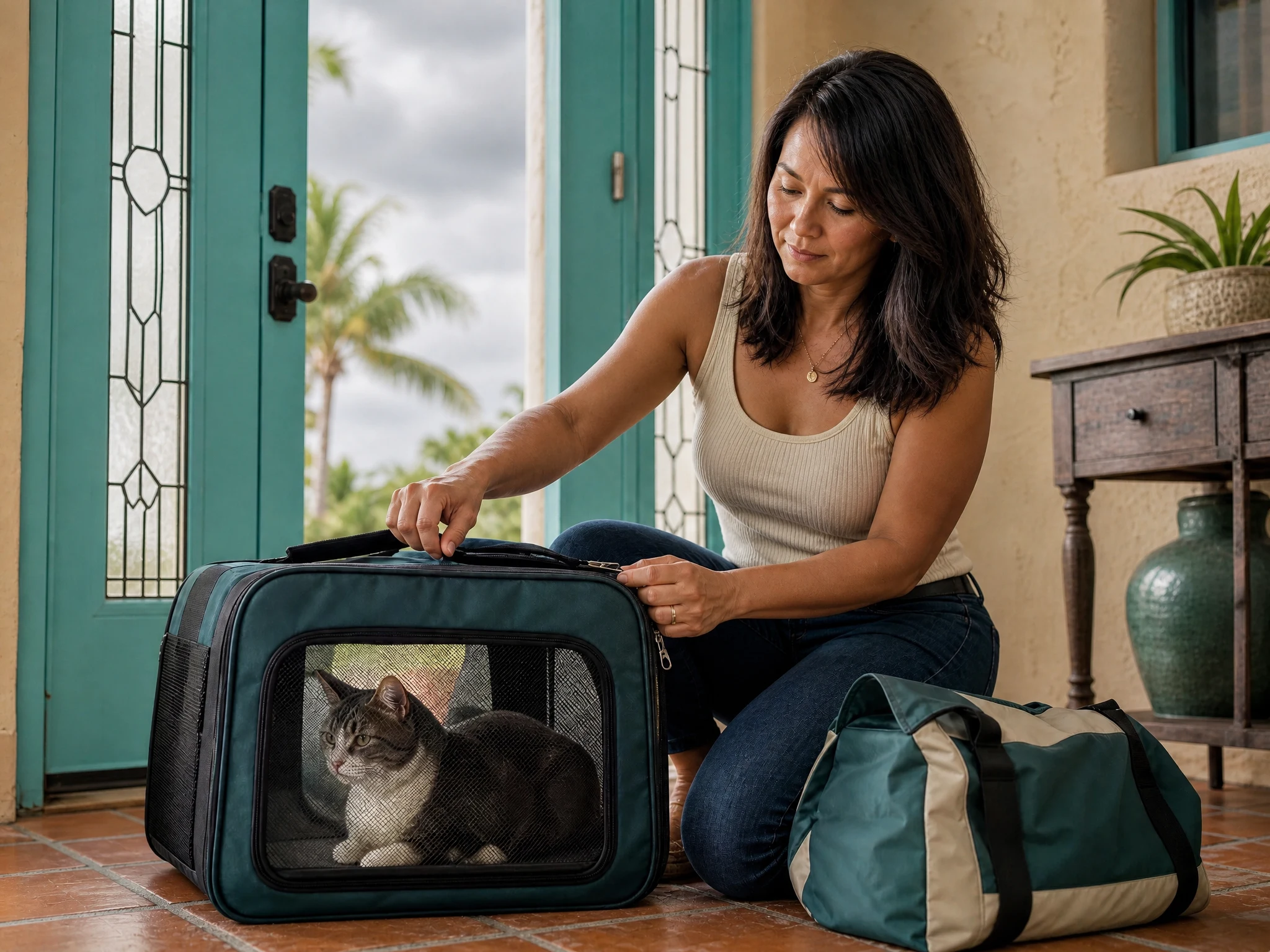
- Pack a go-bag: a week of food and water, medications, a copy of vaccination records, a recent photo, a leash, a carrier and waste bags.
- Confirm that your microchip and registration contact details are current.
- Identify pet-friendly hotels or friends and family inland, such as in Polk County or farther north.
- Ask your landlord how the community handles storm preparation, parking garages and ground-floor flooding.
Living With an ESA Amid Florida Heat, Humidity and HOA Rules
Tampa summers bring heat and humidity that affect every walk. Short-coated and heat-suited breeds need shade, water and cooler-hour walks, and your lease may have rules about balconies, common areas and elevators. Condominiums and HOAs in places like New Tampa, Wesley Chapel and Apollo Beach add their own governing documents. Housing providers may still consider whether a specific animal poses a direct threat or causes substantial damage, so keep your animal well trained and your vaccinations current.
Tampa's seasonal and snowbird rental market adds another wrinkle. Short-term and winter rentals may be handled by different owners or management companies than year-round leases, and policies can differ. Raise your accommodation request early and in writing.
Tips and Common ESA Mistakes to Avoid in Florida
- Buying a registration instead of a letter. Registration cannot replace the letter, and an online registration alone is not sufficient documentation under Florida Statute 760.27.
- Using an out-of-state online clinician. If the provider is not Florida-licensed and has no prior in-person relationship with you, the letter may not hold up with a Florida landlord.
- Waiting until a storm warning. Evacuation planning, microchip updates and landlord conversations are much easier in calm weather.
- Assuming the ID card is enough. It is a display item only, with no legal housing rights.
- Skipping documentation. Keep copies of your request, the landlord's response and any dates.
If an ESA Request Is Denied in Florida
Start by asking the housing provider, in writing, for the reason. Tampa renters can also look into the City of Tampa's fair housing resources, local legal aid organizations, and HUD's fair housing complaint process. Registered owners have access to the legal support team described above for Fair Housing Act issues. For a landlord dispute, consult a Florida-licensed attorney or your local legal aid office.
What to Expect With an ESA in Florida
Many Tampa renters who follow these steps find that their request is reviewed more smoothly, and many also find peace of mind in having a storm plan and a lost-pet recovery listing. Outcomes are never guaranteed. A clinician decides whether an ESA is appropriate, and each housing provider evaluates each request on its own facts.
Important Florida ESA Disclaimer
This article is informational content only. It is not medical, mental-health or legal advice. Consult a Florida-licensed clinician about whether an emotional support animal is appropriate for you, and consult a Florida-licensed attorney about any housing dispute. Review current Florida and federal rules before you act.
Ready to Start Your Florida ESA Letter?
Licensed Florida clinician review. Compliant with state law.
Register My Florida ESA