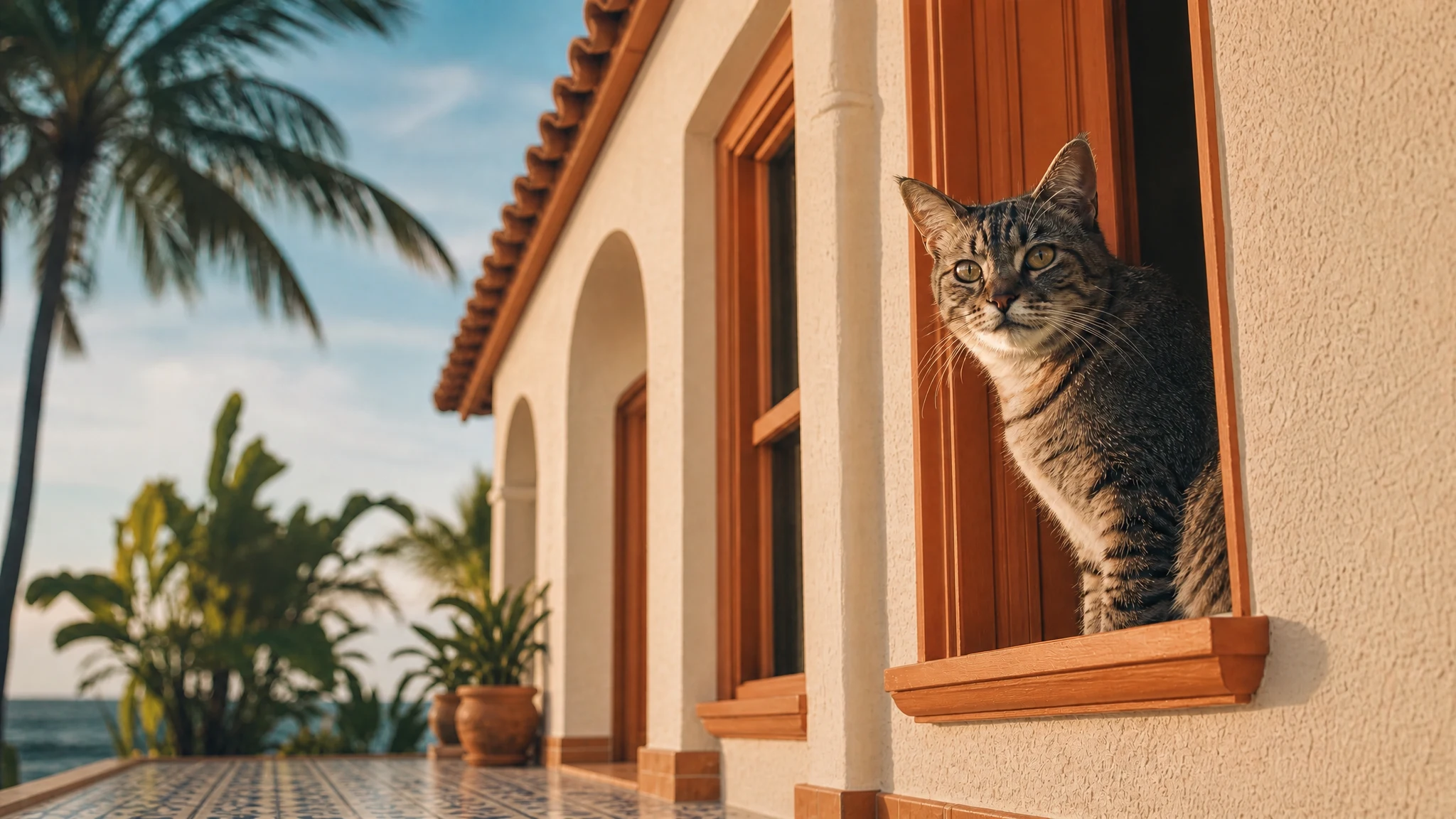
Emotional Support Cats in Florida
For many Floridians, an emotional support cat is the animal that fits the way we live here: indoors, in air conditioning, often in a condo or HOA community where space is limited and the afternoon heat is not. This deep dive looks at what research suggests about cats and human wellbeing, the real health and safety considerations of keeping an ESA cat in a humid, storm-prone state, and how Florida's documentation rules work. It is informational only and is not medical, mental-health, or legal advice.
Registration is not an ESA letter. Registering your cat is a separate, optional service. It is not a substitute for an ESA letter, and it gives you no ESA rights under the Fair Housing Act or Florida Statute 760.27, or any additional rights. Housing rights come only from a letter written by a licensed health care or telehealth practitioner. Florida Statute 760.27 also says an online registration alone is not sufficient documentation.
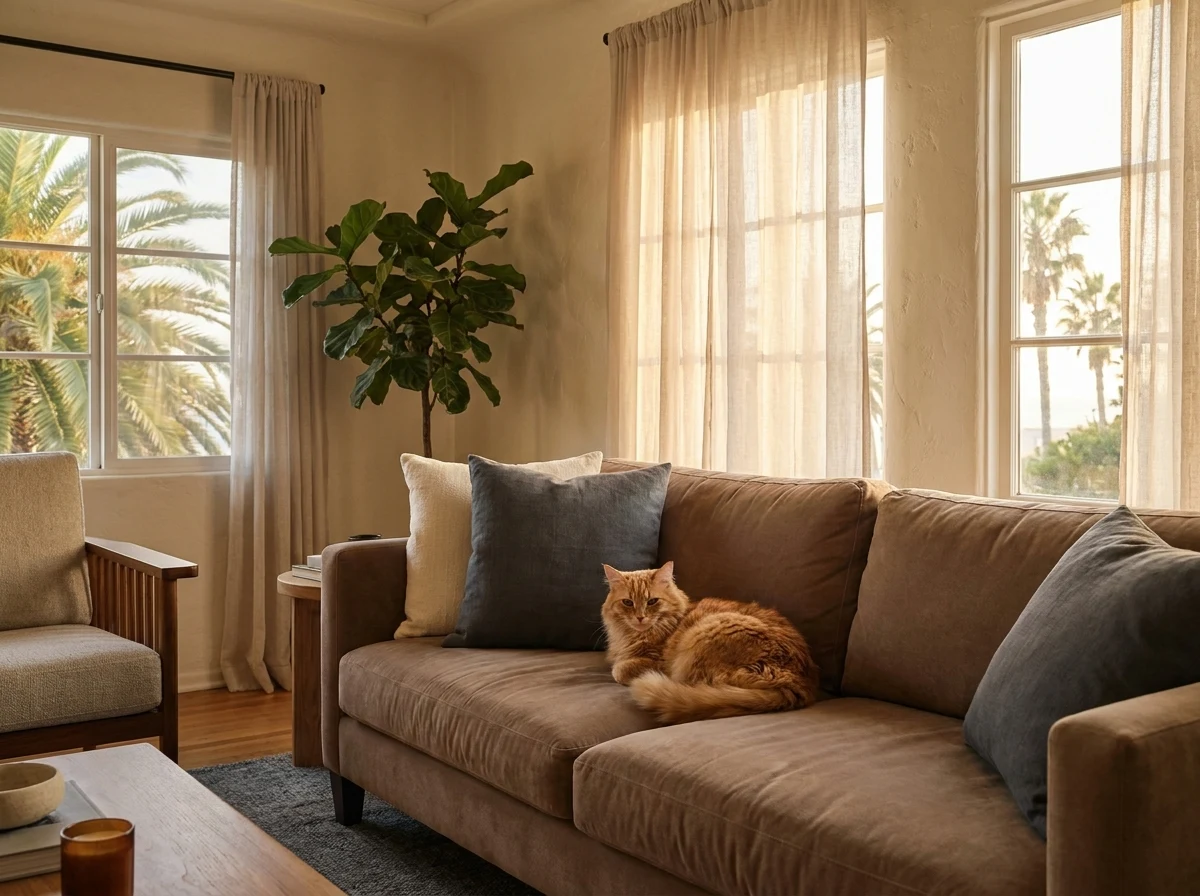
What 'Emotional Support Cat' Means in Florida
An emotional support animal (ESA) is a companion animal that a licensed clinician has determined may be therapeutically helpful to a person with a qualifying condition. A cat is not an ESA because of its breed or because it has been registered. It becomes one for housing purposes when a qualified clinician documents the need in a letter. A licensed clinician, not a website, decides whether an ESA is appropriate for you.
In HUD's notice FHEO-2020-01, Assessing a Person's Request to Have an Animal as a Reasonable Accommodation Under the Fair Housing Act, a housing provider may ask for reliable documentation when a disability and the disability-related need for the animal are not obvious. That notice is the federal reference point for ESA housing requests. Florida adds its own layer in Section 760.27, covered below. Our complete guide to emotional support animals in Florida covers the wider legal picture.
What Research Suggests About Cats and Wellbeing for ESA Owners
The science here is encouraging but modest, and it is worth reading carefully. Most studies on animal companionship are observational, many involve dogs rather than cats, and none establish that a cat treats or cures any condition.
- Attachment. A 2019 study in Current Biology by Vitale and colleagues suggests that many pet cats form attachment patterns toward their owners that resemble the secure attachment seen in dogs and infants. This hints that the bond is real on the cat's side too.
- Stress physiology. Research on human-animal interaction, including work on oxytocin and cortisol, suggests that calm contact with a companion animal may be associated with lower measured stress in some people. Findings vary by individual and study design.
- Cardiovascular associations. An observational analysis by Qureshi and colleagues (2009) reported an association between cat ownership and lower cardiovascular mortality. Because it was observational, it cannot show that cats caused the difference.
- Routine and presence. Many people with anxiety or depression report that feeding, play and a purring animal nearby give structure to the day. A clinician can talk through whether that applies to you.
Why cats specifically? They are quiet, need no outdoor walks in 95-degree weather, and adapt well to apartments. For a resident of a Miami high-rise or a Jacksonville townhome, that practicality matters, though a cat's temperament matters more than its species label.
Heat, Humidity and Flea Season: The Florida Health Profile of an Indoor Cat
The 'science' of keeping a cat well in Florida is mostly about environment. Heat, humidity and parasites shape the risk profile far more than they do in cooler states.
Air-Conditioned Condos and Summer Heat for Florida ESA Cats
An indoor cat in an air-conditioned Orlando or Fort Lauderdale condo is largely protected from heat stress, and keeping cats indoors also reduces exposure to traffic, wildlife and parasites. Flat-faced breeds and cats with heavy coats may tolerate heat less well, so the household setting matters. A power outage on a July afternoon is the point where a cat's comfort can change quickly, which is one more reason to plan ahead for storms.
Humidity, Fleas and Zoonotic Risk for Florida ESA Cats
Fleas can thrive year-round in much of Florida, particularly in humid southern regions. Beyond itching, fleas are associated with the spread of Bartonella henselae, the bacterium behind cat-scratch disease. Veterinary guidance generally recommends year-round flea prevention prescribed by your veterinarian. Humidity can also encourage mold and dust mites in homes, which matters for anyone with respiratory sensitivities.
Allergens and Other Contraindications for ESA Cats
- Cat allergy. The major cat allergen, Fel d 1, is found in saliva and skin secretions and spreads through dander. Allergic household members, or people with asthma, should discuss this with their physician before adopting.
- Toxoplasmosis. Toxoplasma gondii can be shed in the feces of some cats. Pregnant people and those with weakened immune systems are commonly advised to avoid cleaning litter boxes and to speak with their physician.
- Toxic plants. Lilies are dangerous to cats, and several common Florida landscape plants can also cause problems. Check any plant against a veterinary poison resource.
- Lease and building rules. Some condo and HOA documents restrict animals. Those rules interact with fair housing law, but they are worth reading first.

Hurricane Season, Evacuation and Lost-Cat Recovery in Florida
Hurricane season runs from June to November, and for cat owners it deserves real preparation, whether you live in Pensacola, the Tampa Bay area, Fort Myers in Lee County or the Florida Keys. Cats are escape artists under stress. A frightened cat in an evacuation shelter parking lot or a storm-damaged house can slip out of an open door, and many are lost in the chaos after landfall.
- Carrier. Keep a sturdy, well-ventilated carrier for each cat, and let it sit open at home so your cat associates it with safety rather than with emergencies.
- Evacuation plan. Know in advance which pet-friendly shelters and hotels exist along your route. Many general shelters do not accept animals, and policies differ by county.
- Supplies. Pack food, water, litter, medications, veterinary records and a recent photo of your cat.
- Identification. A microchip with current contact details, plus a breakaway collar with a tag, gives shelters more than one way to reach you.
- Coastal flooding. If you live in a flood-prone zone such as low-lying parts of Miami-Dade, plan for the animal to leave with you early rather than late.
This is where registration has a practical, non-legal role. When you register an animal, your cat is added for life to an ESA and lost-pet recovery database, which may help shelters and finders reunite you after a storm. It complements, and does not replace, a microchip.
Condo, HOA and Snowbird Rental Living in Florida: Where the ESA Letter Comes In
Florida has an unusually large number of condominiums, HOA communities, and tourist and snowbird rental markets, from Naples to Daytona Beach. A cat that is fine in your own home may collide with a 'no pets' rule or a seasonal-rental policy. Housing rights for an emotional support animal come only from an ESA letter, which is a separate document from registration.
Florida Statute 760.27 sets out how a housing provider may ask for documentation and who may write it. In plain terms:
- The clinician must be licensed in Florida, or must have an established prior in-person relationship with you.
- An online registration alone is not sufficient documentation.
- Out-of-state, online-only providers who have no Florida license and no prior in-person relationship with you cannot issue a valid Florida ESA letter.
Our guide to Florida ESA letter requirements and who can write one explains the clinician side in more detail. Be wary of fly-by-night sites that sell a 'certificate' for a few dollars and imply it settles a housing question. It does not. For a dispute with a landlord or association, consult a Florida-licensed attorney, or your local legal aid office.
Registration vs. the ESA Letter: What Each One Does
| Feature | ESA Letter | ESA Registration |
|---|---|---|
| Who provides it | A licensed clinician, in Florida licensed or with a prior in-person relationship | A registry company |
| Housing rights under the Fair Housing Act | This is the document housing providers may review | None |
| Required to be accepted by a landlord | Evaluated under FHA and Section 760.27 | No landlord is required to use or accept it |
| Optional? | Needed for a housing request | Yes, optional |
To register, you must also have an ESA letter and be eligible for an emotional support animal. Once you do, registration offers these benefits:
- Lifetime registration per pet in the ESA and lost-pet recovery database, which lets shelters reunite you with a lost pet.
- An animal ID card and certificate to display. They carry no legal housing rights.
- $25 off an ESA letter consultation.
- Access to a legal support team if your Fair Housing Act rights are violated (housing rights only).
- A registry listing that a landlord may look up to see you worked with a legitimate company. No landlord is required to use the registry or accept it.
The Three ESA Registration Steps
- Submit your contact information and confirm you meet the ESA requirements.
- Submit your animal's information and upload a photo.
- Receive your animal ID and certificate by mail, and unlock lost-pet recovery and legal support.
If you do not yet have a letter, you can start at the esaletter homepage, where a Florida-licensed clinician evaluates each person individually. Approval is never automatic, and the clinician decides whether an ESA is therapeutically appropriate for you.
Finding a Good Cat and Trustworthy Florida ESA Information
For sourcing, quality indicators matter more than pedigree. Look for:
- A shelter or rescue (many Florida counties run adoption programs) that provides veterinary records, vaccination history and a spay/neuter confirmation.
- A temperament assessment. Calm, people-oriented cats tend to suit indoor ESA life well, though no breed is guaranteed to.
- A veterinarian who will set up flea prevention, vaccination and a microchip from the start.
For further cat-specific reading, resources such as esacat.com and emotionalsupportcats.com offer additional perspectives on living with an ESA cat.
Important Disclaimer About ESAs in Florida
This article is informational and is not medical, mental-health, or legal advice. It does not diagnose any condition or promise any outcome. Please consult a Florida-licensed mental health professional about whether an emotional support animal may be right for you, review Florida's rules including Statute 760.27 and HUD's FHEO-2020-01 notice, and consult a Florida-licensed attorney, or your local legal aid office, for any housing dispute.
Ready to Start Your Florida ESA Letter?
Licensed Florida clinician review. Compliant with state law.
Register My Florida ESA