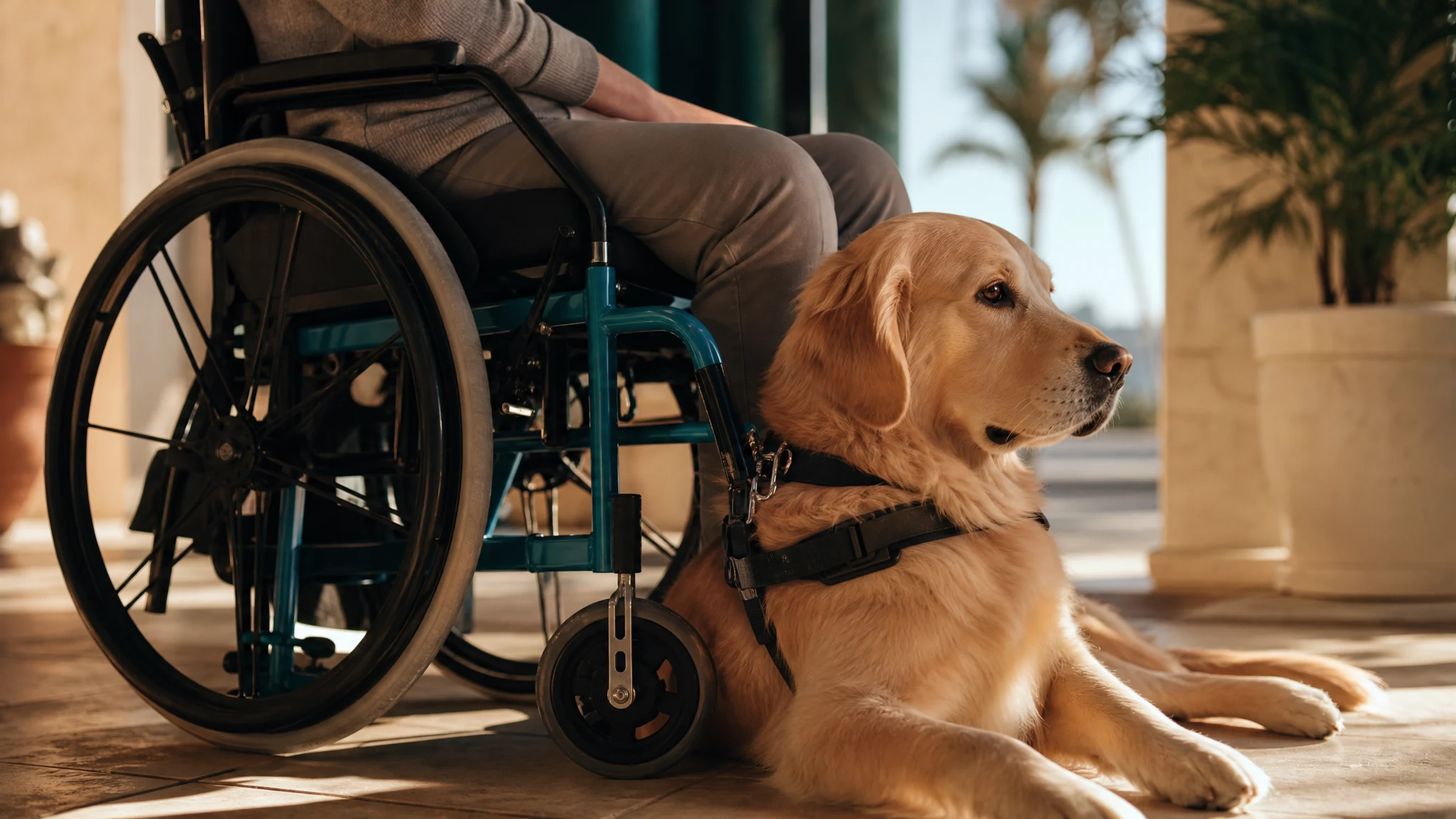
Hurricane Season and Your Registered ESA in Florida
Hurricane season in Florida runs from June to November, and for an emotional support animal owner the question is rarely whether a storm will matter. It is whether your animal is in the plan. Shelter space, hotel rules and lost-animal searches all work differently for pets than for people.
7 min readUpdated November 15, 2026Florida-specific
This post walks through what to pack, where to look for pet-friendly shelter, what your optional registration does after a storm, and why an ESA letter does not get you through a shelter door.
Key Takeaways About ESAs in Florida
Build the plan before a storm is forecast: pet-friendly shelter or lodging, a route, a carrier, and a go-bag with records and a recent photo.
Many public shelters do not accept animals and policies differ by county, so an ESA letter should never be your shelter plan.
Registration adds your animal to our ESA and lost pet recovery database, which helps a finder or shelter reach you. It complements a microchip and tag.
Registration is optional and is not a substitute for an ESA letter. Your housing rights come from a letter from a licensed practitioner.
Why Hurricane Season Is Different for a Florida ESA Owner
An emotional support animal is often the reason a person is calm at home. A storm takes away the home, the routine and the quiet. That is the moment your animal is most likely to bolt and you are most likely to be distracted, which is why the plan has to exist in writing before the first advisory.
Building an Evacuation Kit for Your Emotional Support Animal
The Florida guides list the same core items, and we agree with them. Keep the kit in one bag by the door from June onward, not packed in a rush when a cone appears on the forecast. Our complete Florida ESA guide also notes that vaccination records belong in the storm go-bag, since landlords and lodging may ask about compliance.
Food and water for your animal, plus litter for cats.
Medications and veterinary records, including vaccination history.
A sturdy, well-ventilated carrier for each cat, left open at home so it feels safe rather than scary.
For dogs: a leash and a collar with current tags.
A recent, clear photo of you with your animal, saved in your phone and printed in the bag.
Your ESA letter, your animal ID card and certificate, and your registration details in the same folder.
Pet-Friendly Shelters and Lodging Along a Florida Evacuation Route
The existing guides say it directly: many public shelters do not accept pets, and policies differ by county. We cannot tell you which shelters near you take animals this season, because that changes and we do not run them. What we can tell you is the order we would work in.
Decide Your Destination EarlyPick where you would go if your county were ordered to evacuate, and a second option in a different direction.
Ask Your County Before a Storm Is ForecastContact your county directly and ask which shelters, if any, take animals and what they require you to bring.
Line up Pet-Friendly LodgingCall hotels along your route and ask about their pet policy for your kind of animal. Hotels set their own rules for ESAs, as other public businesses do.
Save Everything OfflinePhone service fails in storms, so keep numbers on paper in the go-bag.
Coastal flooding is the reason to move early. Our cat guide says to plan for the animal to leave with you early rather than late.
Why an ESA Letter Does Not Guarantee Shelter Entry in Florida
This is the misunderstanding we would most like to correct. An ESA letter protects a housing accommodation request under the Fair Housing Act and Florida Statute 760.27. It does not extend to shelters, hotels, restaurants or other public places, which set their own pet policies. Our guide on taking an emotional support animal into public places explains why, and the ESA versus service dog comparison covers where public access actually belongs.
A Letter or ID Card Is Not a Shelter Pass
Showing an ESA letter, an ID card or a certificate at a shelter or hotel does not oblige them to admit your animal. Plan as if you will be treated like any other pet owner, and treat shelter policy as the deciding rule.
Where your letter does matter is afterward. If a storm damages your home and you are looking for a new rental, a landlord may ask for reliable information from your practitioner, and our guide to how Florida landlords verify an ESA letter shows what to expect.
How ESA Registration and Lost Pet Recovery Help if You Are Separated
When you register, your animal is added for life to our ESA and lost pet recovery database. A shelter or anyone who finds your animal can look it up by microchip number or ID number and reach you.
You also receive an animal ID card and certificate in the mail. They identify your animal. They carry no legal housing rights, and they do not open any shelter door.
Tool
What It Does After a Storm
What It Does Not Do
Microchip with current contact details
Lets a vet or shelter scan and find your contact information
Does not help if the details are out of date
Collar and tag
Lets a neighbor reach you without a scanner
Can slip off, especially a breakaway collar on a cat
Lost pet recovery database
Gives a finder or shelter another way to look you up
Replaces neither a microchip nor a tag
ID card and certificate
Identifies the animal
Carries no legal housing rights
Recent photo with you
Shows the animal is yours
Does not locate the animal on its own
Our cat and dog guides both say registration complements the basics and should not replace them. If you have to pick one thing to do this week, make sure the microchip number is current.
Registration Is Not a Substitute for an ESA Letter
The Order of Operations Still Applies
Registration is optional, and it does not stand in for an ESA letter. It gives no ESA rights and no additional rights. To register you must be eligible for an emotional support animal and have an ESA letter, and the letter from a licensed health care or telehealth practitioner is what carries housing rights.
Florida Statute 760.27 also says an online registration alone is not sufficient documentation for a landlord. A landlord may look up our registry listing to see you worked with a legitimate company, but no landlord is required to use it or accept it. If you want the full picture, our legitimacy section separates what registration is from what a letter is, and the ESA process pages cover getting one.
Keeping Your ESA Registration Details Current Before and After a Storm
A database is only as useful as the contact information in it. Storms are exactly when people move, change numbers and lose phones, so check your details at the start of each season rather than after a loss.
Confirm your phone number and email are ones you will still reach after a power outage.
Check that your microchip number matches the one on your veterinary records.
Confirm your animal's name, breed, weight and photo still describe the animal you have.
If you move because of storm damage, update your address in every place your animal is listed.
If a storm forces a move, remember that a housing request to a new landlord rests on your letter, not on the registration. A new condo or HOA may have its own process, and our guide on HOA and condo associations explains where the limits are.
A Simple Hurricane Plan for Your Florida Emotional Support Animal
If you remember nothing else, remember the split. Safety planning is yours to do: shelter, route, kit, microchip and tag. Registration is a lost pet recovery backup. Your housing rights under Florida law come from the letter. Keep those three jobs separate, and read our ESA types guides next.
Frequently Asked Questions About Hurricane Season and Your Registered ESA in Florida
Below, we answer the most commonly asked questions about Hurricane Season and Your Registered ESA in Florida.
Will Florida Shelters Take My Emotional Support Animal During a Hurricane?
Not necessarily. Many public shelters do not accept animals, and policies differ by county. An ESA letter protects housing accommodation requests and does not guarantee entry to a shelter, so contact your county before a storm and line up pet-friendly lodging as a backup.
What Should Be in a Hurricane Go-Bag for an ESA?
Food, water, litter for cats, medications, veterinary and vaccination records, a carrier or leash and collar with tags, and a recent photo of you with your animal. We also suggest copies of your ESA letter and registration details.
How Does ESA Registration Help If a Hurricane Separates Me From My Animal?
Registration adds your animal for life to our ESA and lost pet recovery database. A shelter or finder can look it up by microchip number or ID number and reach you. It complements a microchip and tag and does not replace them.
Does My ESA ID Card Give Me Rights at a Shelter or Hotel?
No. The ID card and certificate identify your animal and carry no legal housing rights. Shelters and hotels set their own pet policies, and registration is not a substitute for an ESA letter.
How Do I Keep My ESA Registration Details Current Before Storm Season?
Before June, check that your phone, email, address and microchip number are correct and match your veterinary records.
Keep Reading
More Best FL ESA Types Guides
Keep reading: our other guides in this topic, newest registration guides first.
If you are eligible for an emotional support animal and have an ESA letter, you can add optional lifetime registration and lost pet recovery for your animal. Registration is not a substitute for an ESA letter.
Registration is optional. It is not a substitute for an ESA letter and gives no ESA rights or additional rights; a letter from a licensed health care or telehealth practitioner is what carries housing rights.