
Emotional Support Animals for Veterans in Florida
Florida is home to a large veteran population, from retired service members in Tampa Bay and the Space Coast to families near the Panhandle's bases. Many of them ask about a Florida ESA veteran pathway: how an emotional support animal fits alongside VA care, what documentation a landlord may ask for, and what registration does. This article treats the subject as a science-minded explainer. It describes what research suggests, how the Florida legal framework works, and where the real safety considerations lie.
Registration is not an ESA letter. Registration is a separate, optional service. It is not a substitute for an ESA letter, and it gives no ESA rights under the Fair Housing Act or Florida Statute 760.27, or any additional rights. Housing rights come only from a letter written by a licensed health care or telehealth practitioner. Florida Statute 760.27 also says an online registration alone is not sufficient documentation.
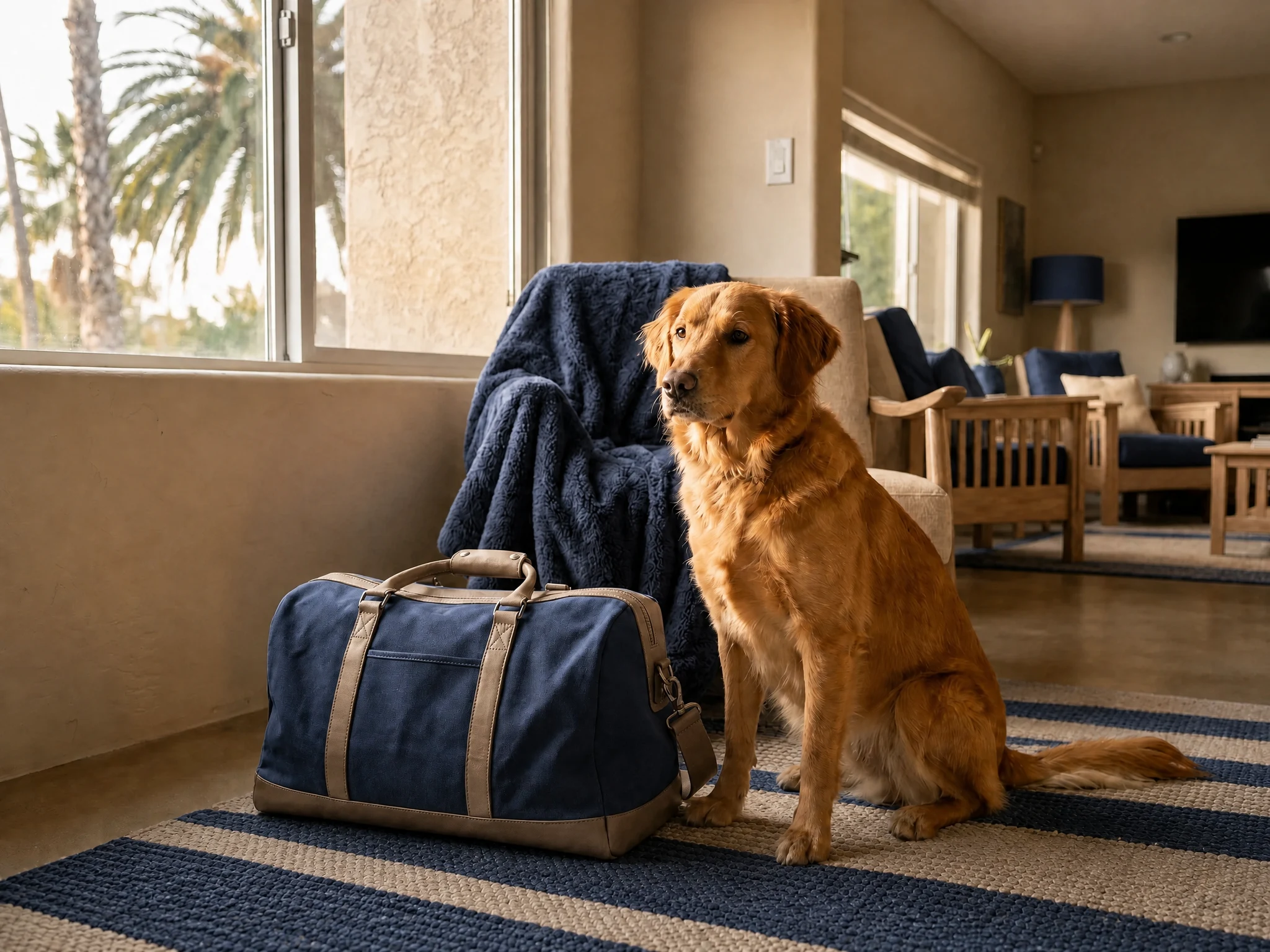
Why Florida Veterans Ask About ESAs
Florida's veteran community is spread across very different settings: retirement condos in Sarasota, rentals near Pensacola, suburban homes in Tampa, and apartments in Jacksonville. Many veterans already receive care through the VA or through private clinicians, and some ask whether an animal companion could be a helpful part of their wider routine. Many people living with stress, anxiety, low mood or sleep difficulty find the daily structure of caring for an animal helpful. Whether an ESA is therapeutically appropriate for a particular person is a decision for a licensed clinician. It is not something this article, or any website, can decide.
One point of confusion deserves clarity early: the VA does not issue ESA letters. A VA clinician may discuss an animal as part of your wellbeing, but an ESA letter for housing purposes comes from a private licensed health care or telehealth practitioner who evaluates you individually.
What the Research Suggests About ESAs for Veterans
Research suggests that companion animals may be associated with lower self-reported stress and greater feelings of routine and connection for some people. Studies of veterans and animals, including work on trained service dogs, have generally been small or mixed in design, and researchers continue to call for larger, better-controlled studies. It is therefore more accurate to say that some veterans report benefits from an animal's presence than to say an animal treats or cures any condition.
It also helps to separate categories. An emotional support animal needs no special training and is recognized in housing under federal fair housing rules. It is different from a task-trained animal. Research on trained animals should not be read as evidence about every pet, and nothing here should be taken as a diagnosis or a promise of any result.
ESA Letter Requirements: Who May Write One in Florida
An ESA letter is a clinical document. Florida Statute 760.27 requires that the clinician providing the documentation be licensed in Florida, or have an established prior in-person relationship with you. An online-only provider licensed in another state cannot issue a valid Florida ESA letter. Eligible practitioners are typically licensed mental health professionals such as an LCSW, LMHC, LMFT, psychologist or psychiatrist, or another licensed health care practitioner acting within their scope. Florida law also addresses misrepresenting a need for an ESA (s. 817.265), so honesty during your evaluation matters.
For federal authority, housing providers and clinicians look to HUD notice FHEO-2020-01, "Assessing a Person's Request to Have an Animal as a Reasonable Accommodation Under the Fair Housing Act." You can read the specifics in our guide to ESA letter requirements in Florida and who can write one, and check your own situation with our overview of whether you qualify for an emotional support animal in Florida. A licensed clinician, not a website, determines whether an ESA is appropriate for you, and no approval is ever automatic.
Base Housing Versus Private Rentals for Florida ESAs
Where you live changes which rules apply. In a private rental, condo or HOA community, the Fair Housing Act and Florida Statute 760.27 are the frameworks a landlord or association typically applies to an ESA request. On military installations, housing is generally governed by Department of Defense and service-branch policy instead. Housing connected to MacDill Air Force Base in Tampa, Naval Air Station Jacksonville and Naval Air Station Pensacola follows DoD policy, which can differ from private-market rules on documentation, approvals and animal limits. Privatized housing partners may add their own procedures. Because policies change, contact the installation housing office before you assume anything, and ask for the current rules in writing.

ESA Registration in Florida: What It Adds and What It Does Not
Registration is separate from the letter, and the letter is what carries housing weight. To register, you must also have an ESA letter and be eligible for an emotional support animal. If you choose to register, the benefits are these:
- Lifetime registration per pet in an ESA and lost-pet recovery database, which lets shelters reunite you with a lost pet. This is the most practical benefit, particularly in a state where storms and evacuations can separate people from animals.
- An animal ID card and certificate you can display. They carry no legal housing rights.
- $25 off an ESA letter consultation.
- Access to a legal support team if your Fair Housing Act rights are violated. This covers housing rights only.
- A listing on the registry, which a landlord may look up to see that you worked with a legitimate company. No landlord is required to use the registry or to accept it.
The steps are straightforward:
- Submit your contact information and confirm you meet the ESA requirements.
- Submit your animal's information and upload a photo.
- Receive your animal ID and certificate by mail, and unlock lost-pet recovery and legal support.
Be wary of generic services that sell a $40 "certificate" as though it were a legal credential. A registration alone is not sufficient documentation under Florida law.
Florida Heat, Humidity, Hurricane Season and Condo Living
Florida conditions shape daily life with an animal, and they are where registration and the letter each play a practical role. Summer heat and humidity in Tampa, Orlando and Miami make midday walks risky, particularly for flat-faced breeds, and pavement can burn paws. Short-coated, heat-suited animals often cope better, but every animal needs shade, water and early or late walks.
Hurricane season runs from June to November, and evacuation planning matters. Many public shelters have limited pet policies, so decide in advance where you and your animal will go, and keep a photo, vaccination records and a carrier ready. This is where lost-pet recovery registration can matter most: a registered animal with a photo on file is easier to reunite after a storm. Coastal flooding in places like the Gulf Coast and the Keys adds a further reason to plan your route and your destination.
Condos and HOAs are common across retirement-heavy regions of Florida, and their rules on pets can be strict. A valid letter from a Florida-licensed clinician is the document that supports a reasonable accommodation request. Tourist and snowbird rental markets, such as vacation rentals in St. Petersburg or Naples, often operate under their own policies, so confirm what applies to your lease before you sign.
Safety Profile and Contraindications for ESAs in Florida
An animal is not appropriate for everyone, and a clinician can help you weigh the factors. Points worth discussing include:
- Allergies and asthma in you or household members.
- Startle responses. Some veterans find that unexpected barking or sudden movement is unsettling, so temperament matters.
- Physical demands. Walking, feeding and veterinary care require energy and funds, and mobility limits or unstable schedules can make that hard.
- Heat exposure and the animal's welfare. Florida's climate is a daily factor for the animal.
- Medication and sleep. An animal that wakes you at night may affect rest.
An ESA is not a replacement for professional care, and nothing here is a substitute for it. If you are in crisis, contact the Veterans Crisis Line by dialing 988 and then pressing 1, or call emergency services.
Quality Indicators When Choosing an ESA Provider in Florida
When sourcing documentation or registration, look for markers of legitimacy:
- The clinician is licensed in Florida (or has a prior in-person relationship with you), and you can verify the license with the state.
- You receive an individual evaluation. Instant or automatic approvals are a warning sign.
- The company states plainly that registration is not a letter and carries no legal rights.
- There are no promises of guaranteed outcomes, and the pricing is transparent.
When you are ready, the esaletter intake lets you begin with a licensed clinician evaluation and, if you wish, add optional registration afterward.
Important Disclaimer About ESAs for Florida Veterans
This article is informational content only. It is not medical, mental-health or legal advice. Please consult a Florida-licensed clinician about whether an emotional support animal may be appropriate for you, and review Florida's specific rules. For landlord or HOA disputes, consult a Florida-licensed attorney, or contact your local legal aid office for help with Fair Housing Act enforcement. No outcome is guaranteed.
Ready to Start Your Florida ESA Letter?
Licensed Florida clinician review. Compliant with state law.
Register My Florida ESA