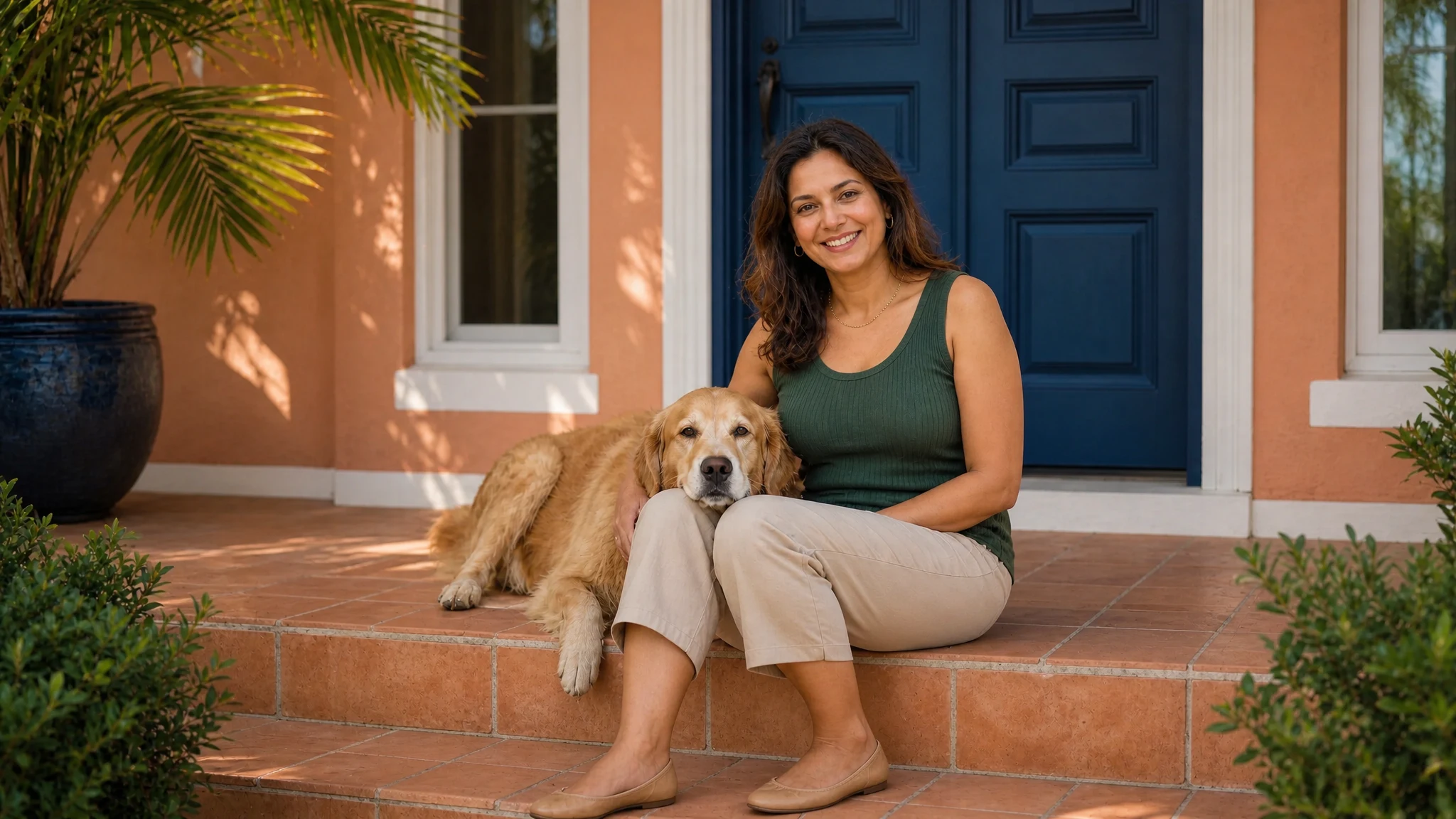
Do You Qualify for an Emotional Support Animal in Florida?
Florida is a beautiful place to live and, for many residents, a demanding one. Summers keep people indoors for weeks at a stretch, hurricane season runs from June to November, and condo living or a long distance from family can leave a person feeling isolated. Many people in that position ask the same question: how do I get an emotional support animal in Florida, and do I qualify? This guide explains the Florida ESA requirements in plain English: who may qualify, what a Florida-licensed clinician evaluates, what you need before you can register, and how registration differs from the ESA letter.
Read this first: Registration is not a substitute for an ESA letter. Registration gives you no ESA rights under the Fair Housing Act or Florida Statute 760.27, and no additional rights of any kind. Housing rights come only from a letter written by a licensed health care or telehealth practitioner. Florida Statute 760.27 also states that an online registration alone is not sufficient documentation. To register, you must also hold an ESA letter and be eligible for an emotional support animal.

Key Takeaways About Qualifying for an ESA in Florida
- An emotional support animal (ESA) is an animal that provides therapeutic comfort to a person with a disability-related need. It is not a pet by another name and it is not a trained service animal.
- Whether you qualify is decided by a licensed clinician after an individual evaluation. Nobody can promise approval, and this article cannot tell you that you qualify.
- Under Florida Statute 760.27, the clinician must be licensed in Florida or have an established in-person relationship with you. Out-of-state, online-only providers cannot issue a valid Florida ESA letter.
- The ESA letter is the document that supports a housing request under the Fair Housing Act. Registration is a separate, optional service.
- Registration's most practical benefit is lifetime listing in an ESA and lost-pet recovery database, which helps shelters reunite you with a lost animal. That matters in storm season.
Table of Contents for This Florida ESA Guide
- What an Emotional Support Animal Is, and What It Is Not
- Who May Qualify for an ESA in Florida
- Florida ESA Requirements: What the Law Says
- Florida Heat, Storms and Condo Living: How Local Conditions Shape the Picture
- Registration vs. the ESA Letter
- How to Get an Emotional Support Animal in Florida: Step by Step
- Common Questions and Cautions About Qualifying for an ESA in Florida
What an Emotional Support Animal Is, and What It Is Not
An emotional support animal is a companion animal that provides therapeutic benefit, through companionship and presence, to a person who has a disability-related need. The Department of Housing and Urban Development (HUD) addresses ESAs in its notice FHEO-2020-01, Assessing a Person's Request to Have an Animal as a Reasonable Accommodation Under the Fair Housing Act. That notice is the federal authority most Florida landlords, condo associations and HOAs look to when a resident asks to keep an ESA in a building with a no-pets rule.
An ESA Is Not a Service Animal
A service animal is individually trained to perform specific tasks. An ESA is not required to have any special training. That distinction affects where an ESA may go. In practice, an ESA's protections are focused on housing, and the Fair Housing Act is the framework that applies. Do not assume an ESA can accompany you into stores, restaurants or other places that do not allow pets.
An ESA Is Not an Air-Travel Entitlement
Since the Department of Transportation changed its rules in 2021, airlines treat emotional support animals as ordinary pets. If you plan to fly out of Miami, Orlando or Tampa with an animal, expect to follow the airline's pet policy and fees, and check with the airline directly.
Which Animals Are Commonly Involved as ESAs
Dogs are the most common, though cats and other common domestic animals can be considered. A landlord may still assess whether a particular animal poses a direct threat or would cause substantial damage that cannot be reduced by other means. HUD's guidance describes that assessment as individualized, so breed or size restrictions in a building's pet policy are not applied the way they are to ordinary pets.
Who May Qualify for an ESA in Florida
There is no checklist that makes a person automatically eligible. In general, someone may qualify when a licensed clinician concludes that the person has a disability-related need, meaning a condition that substantially limits one or more major life activities, and that an emotional support animal may help with the effects of that condition. The clinician makes that judgment. Neither a website nor a registry can make it for you.
The Questions a Clinician Typically Explores for an ESA
- Your current symptoms and daily functioning. How do sleep, work, social contact, concentration or leaving the house feel right now?
- How long and how significantly. Is this a lasting pattern, or a short, passing rough patch?
- Whether an animal may help. Can the clinician reasonably see a connection between your symptoms and the support an animal could offer?
- Your living situation. Where do you live, and is the animal something you can responsibly care for there?
- Your wider care. What other supports, such as therapy, medication managed by your prescriber, or community, are in your life?
Conditions People Commonly Discuss When Seeking an ESA
Many people who talk with clinicians about an ESA are living with anxiety, depression, post-traumatic stress, panic, or loneliness tied to major life changes. Many people with these concerns find that a steady animal companion supports their routine. That is a general observation, not a promise, and having any of these concerns does not mean you qualify. A licensed clinician will determine whether an ESA is therapeutically appropriate for you. Our condition guides elsewhere on the site look at each of these in more depth.
Veterans and Service Members Seeking an ESA in Florida
Florida is home to one of the largest veteran populations in the country, from the Panhandle near Pensacola and the bases around Jacksonville to the Space Coast and South Florida. Veterans who are weighing an ESA face some particular questions about records, existing providers and housing. Our companion guide on emotional support animals for veterans in Florida covers those points.

Florida ESA Requirements: What the Law Says
People searching for emotional support animal Florida requirements often find generic national pages. Florida has its own statute, so the details matter. The core rules are summarized below. Treat this as general information and check the current text of the law yourself, because statutes can be amended.
Florida Statute 760.27
Florida Statute 760.27 governs how housing providers handle requests to keep an assistance animal, including an emotional support animal, as a reasonable accommodation. In summary:
- A housing provider may ask for reliable documentation when a person's disability or disability-related need is not readily apparent.
- The documentation must come from a health care practitioner who is licensed in Florida, or who has provided in-person care or services to the person, or who is licensed in another state and has an established in-person relationship with the person.
- The statute states that an online registration alone, or a document obtained solely from an online source, is not sufficient documentation.
- A housing provider generally may not charge a fee or deposit for an assistance animal as such, though a tenant can remain responsible for damage the animal causes.
- Knowingly giving false information to obtain this protection can carry legal consequences. Florida Statute 817.265 addresses misrepresentation connected with ESA documentation.
What Florida ESA Law Means for You
The practical takeaway is the Florida-licensed clinician requirement. An out-of-state, online-only provider with whom you have no prior in-person relationship cannot issue a valid Florida ESA letter. Before you pay for any evaluation, ask for the clinician's license type and confirm it through the Florida Department of Health license lookup.
Who May Write the ESA Letter in Florida
An ESA letter comes from a licensed mental health professional or other licensed health care practitioner, such as a licensed clinical social worker, mental health counselor, marriage and family therapist, psychologist, psychiatrist, or a licensed primary-care provider, working within Florida's licensing rules. A letter from anyone else, including a friend, a breeder or a website with no clinician, is not a valid ESA letter.
The Federal Layer for ESAs
The Fair Housing Act applies across the country and HUD notice FHEO-2020-01 explains how housing providers should evaluate these requests. Florida's statute sits alongside it. If a landlord denies a request you think is reasonable, consult a Florida-licensed attorney. Your local legal aid office may also be able to help with Fair Housing Act enforcement. This article cannot predict how any specific dispute would turn out.
Florida Heat, Storms and Condo Living: How Local Conditions Shape the Picture
A clinician evaluates you as an individual, but where you live is part of the context. Florida's environment creates stressors that come up often in conversations about emotional support.
Heat-Bound Florida Summers and Isolation
From June through September, the heat and humidity in places like Fort Myers, Miami-Dade County and Orlando can keep people inside for long stretches. For someone already prone to isolation, such as a retiree whose family lives up north or a remote worker in a new city, those weeks can feel long. Many people in that situation find a daily routine with an animal helpful. A short-coated or heat-suited animal still needs care in this climate: walks in the early morning or after sunset, shade, water and never leaving the animal in a parked car.

Hurricane Season Anxiety and Evacuation With an ESA
Hurricane season, June to November, brings a particular kind of worry: watching the forecast, deciding whether to evacuate, and thinking about coastal flooding in areas such as Tampa Bay, the Keys and the Gulf Coast. People living with anxiety may find these months especially hard. Planning matters. Many public shelters have limited pet policies, so identify pet-friendly shelters or lodging in advance, and keep vaccination records and a carrier ready. This is also where a lost-pet database has real practical value: animals are sometimes separated from their owners in an evacuation, and a microchip and registry listing can help reunite you.
Condos, HOAs and Rental Markets in Florida
Florida has an unusually large number of condominiums, HOA communities and 55-plus developments, and many of them restrict pets by size, breed or number. Tourist and snowbird rental markets in cities like Naples, St. Petersburg and Sarasota add another layer, with seasonal leases and owners who may not be familiar with assistance animal rules. In each case, the letter is the document that supports a request under the Fair Housing Act. A registry listing or an ID card does not replace it. Submit your request to the association or landlord in writing and keep copies of everything. If it is refused, a Florida-licensed attorney can advise you.
Registration vs. the ESA Letter
This is the most misunderstood point in the whole subject, so here it is plainly.
| ESA letter | ESA registration | |
|---|---|---|
| What it is | A document from a licensed health care or telehealth practitioner | A separate, optional listing in an ESA and lost-pet recovery database |
| Supports a housing request under the Fair Housing Act | Yes, this is where housing rights come from | No |
| Gives ESA rights or additional rights | It is the supporting document for a reasonable accommodation request | No |
| Needs a clinician evaluation | Yes, an individual evaluation by a Florida-licensed clinician (or one with a qualifying prior in-person relationship) | You must already have an ESA letter and meet the ESA requirements |
| Sufficient on its own in Florida | Generally the documentation a housing provider may ask for | No. Under Statute 760.27, an online registration alone is not sufficient |
What ESA Registration Does Offer
Registration is optional. If you choose it, these are the benefits:
- Lifetime registration per pet in the ESA and lost-pet recovery database, which lets shelters look up your animal and reunite you if your pet is lost. For Florida households that may have to evacuate in a storm, this is the benefit most people value first.
- An animal ID card and certificate you can display. They carry no legal housing rights.
- $25 off an ESA letter consultation.
- Access to a legal support team if your Fair Housing Act rights are violated. This covers housing matters only.
- A listing on the registry, which a landlord may look up to see that you worked with a legitimate company. No landlord is required to use the registry or to accept it.
A Word on Look-Alike ESA Offers
Be wary of fly-by-night websites that sell a $40 “certificate” with no clinician involved and imply it works like a letter. It does not, and in Florida an online registration alone is not sufficient documentation. A trustworthy provider will explain the difference, put you in front of a licensed clinician, and never promise guaranteed approval.
How to Get an Emotional Support Animal in Florida: Step by Step
If you are asking how to get an emotional support animal in Florida, the sequence below is the honest answer. Note that the letter comes first and registration is a separate, later option.
Part One: The ESA Letter
- Decide whether an ESA fits your situation. Think honestly about your day-to-day needs, your living arrangement and whether you can care for an animal in Florida's climate for its whole life.
- Find a Florida-licensed clinician. That means a licensed professional in Florida, or one who has a qualifying prior in-person relationship with you under Statute 760.27. Verify the license.
- Complete an individual evaluation. The clinician will talk with you about your history, symptoms and daily life. The outcome is not predetermined. Nobody can promise you a letter.
- If the clinician determines an ESA is appropriate, you receive an ESA letter. Keep a copy and provide it with your written accommodation request to your landlord, condo association or HOA.
Part Two: Optional ESA Registration
Once you hold an ESA letter and meet the ESA requirements, you may choose to register your animal. It takes three steps:
- Submit your contact information and confirm that you meet the ESA requirements.
- Submit your animal's information and upload a photo.
- Receive your animal ID and certificate by mail and unlock lost-pet recovery and legal support.
If you want to start with the evaluation, our homepage intake walks you through the process and connects you with Florida-licensed clinicians. Starting there is not a promise of approval. The clinician decides.
Handling the ESA Housing Request in Florida
- Make the request in writing and keep a dated copy.
- Provide the letter when the housing provider asks for reliable documentation.
- Be prepared to be responsible for your animal's behavior and any damage it causes.
- If there is a dispute, speak with a Florida-licensed attorney or your local legal aid office.
Common Questions and Cautions About Qualifying for an ESA in Florida
Can I Qualify for an ESA in Florida Without Seeing Anyone in Person?
A telehealth evaluation can be legitimate when the clinician is licensed in Florida or meets the prior in-person relationship requirement under Statute 760.27. What does not work is an out-of-state provider with no connection to you issuing a Florida letter.
Can Anyone Guarantee That I Will Qualify for an ESA in Florida?
No. A clinician evaluates each person individually, and no outcome can be promised in advance. Be skeptical of any service that advertises an instant letter or guaranteed approval for an emotional support animal.
Does My Florida Landlord Have to Accept an ESA ID Card?
No. An ID card or registry listing carries no legal housing rights. A landlord may choose to look at the registry, but is not required to use it or accept it. The letter is the document that matters for a housing request.
Does a Registry Listing Show That I Qualify for an ESA in Florida?
No. Registration is optional, it is not an ESA letter, and it does not prove you qualify or give you any housing rights. To register you must already be eligible for an emotional support animal and have an ESA letter from a licensed health care or telehealth practitioner.
Is It Legal to Misrepresent a Pet as an ESA in Florida?
Florida law, including Statute 817.265, addresses misrepresentation connected with ESA documentation. Be truthful in your evaluation and in your housing request.
Final Thoughts on Qualifying for an ESA in Florida
Qualifying for an emotional support animal in Florida comes down to an honest conversation with a Florida-licensed clinician, not a website, a fee or a registry. The ESA letter is the document that supports a housing request. Registration is a separate, optional step that adds lifetime lost-pet recovery, an ID card and certificate with no legal housing rights, $25 off a letter consultation, housing-related legal support and a registry listing a landlord may look up but is not required to accept. For anyone living through Florida's long summers and storm seasons, that combination of a properly obtained letter and a recoverable, registered pet can offer real peace of mind.
Disclaimer: This article is informational and is not medical, mental-health or legal advice. It does not diagnose any condition or guarantee that you will qualify for an emotional support animal or that any landlord, condo association or HOA will approve a request. Please consult a qualified Florida-licensed mental health professional about your own situation, and consult a Florida-licensed attorney, or your local legal aid office, for any housing dispute. Review the current text of Florida Statute 760.27 and HUD notice FHEO-2020-01 for yourself, as laws and guidance can change.
Ready to Start Your Florida ESA Letter?
Licensed Florida clinician review. Compliant with state law.
Register My Florida ESA